I just have a few questions about keynesian economics.
firstly, in an economy with space capacity, how exactly will printing money cause inflation? imagine a football stadium which is half empty. the government gives fans (prints) extra money. as the stadium is usually half empty, more fans will obviously go to the stadium and new fans will too but the stadium owners wouldnt raise the price of tickets, would they? this is analogous to an economy operating below its full potential. so therefore in a recession, if the government were to print money, why would this cause inflation?
secondly, in a recession, firms are obviously discouraged from investing. how does the market encourage growth in a recession, especially when wages remain high due to stickiness. why would a business want to invest in a recession without government help?
What specifically do you mean by “space capacity”?
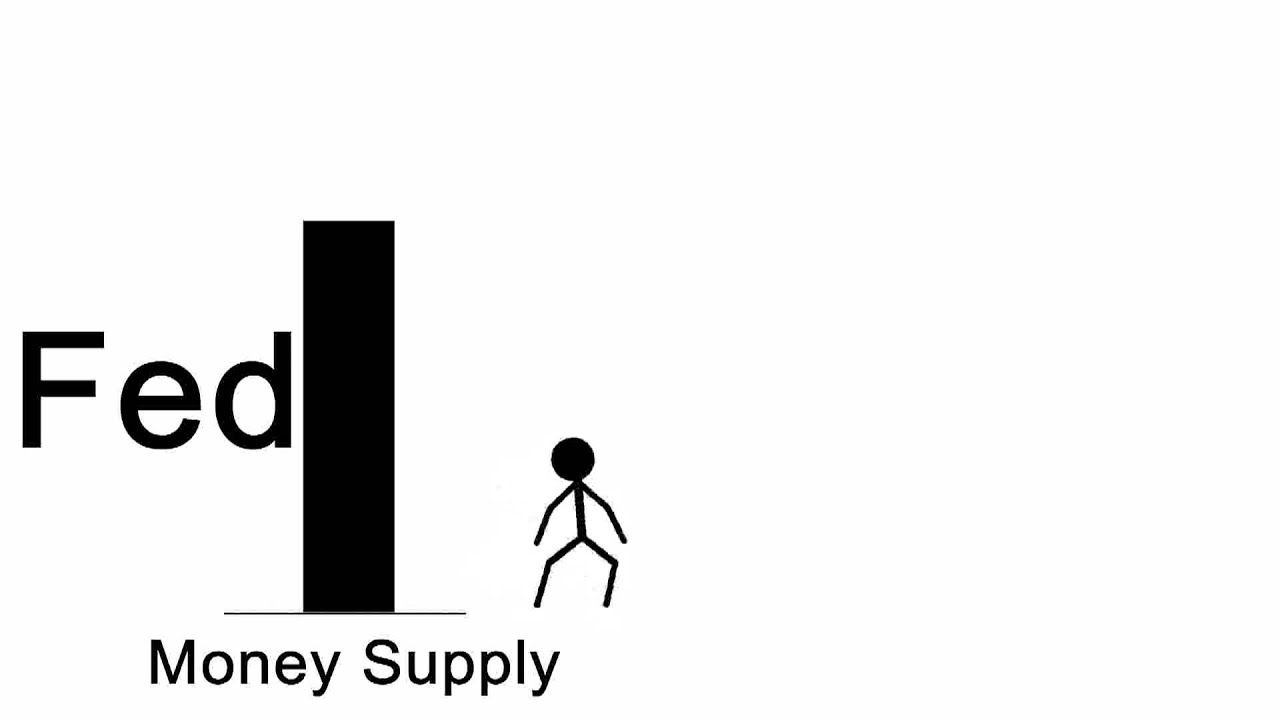
You have to remember prices are a ratio. When you look at something in terms of dollars, you are comparing the value of the object, to the value of the dollar. And the objective prices based on those valuations are determined by supply and demand. In general, the greater the supply of something, the less valuable it is. And as the supply increases, ceteris paribus, price will decrease. Have a look at these two videos. They may prove very helpful…
Here is where defining your terms is important if you want to get a real answer. What exactly do you consider “growth”? And what exactly is a recession? For some, “economic growth” is simply a higher GDP. For others, GDP is meaningless. If you mean increased prosperity and a higher standard of living, you first have to understand that that comes from increased productivity. And increased productivity comes from capital accumulation and free trade (and the resulting division of labor). This does not need “encouragement”. People are always interested in making a profit, and they can be counted on to act in their own self-interest. There is nothing the government can do to help this process. It can only interrupt, hinder, mislead and ultimately cause waste.
With regards to your first question, what you are essentially saying is this: In a scenario where prices are generally “stuck” too high across the economy leading to their under utilisation, how will printing money lead to price inflation? Well, the answer is that it probably wouldn’t, unless the inflation were expected, in which case prices might rise accordingly leaving the economy no better off than before.
However, the Austrian response would probably be to reject your premise, that we would ever be in a situation where prices were generally stuck too high (in the absense of institutional interference) for any long period of time. Prices do adjust downwards, although not always as quickly as they should.
Also, Austrians would probably object to the framing of the problem. Under utilisation of resources/capital is not the problem as such, it is rather misallocation of resources/capital. What is needed to “cure” the recession then is not for demand for the existing capital structure to be somehow restored, but rather for it to be restructered and realigned according to the market’s most urgent ends.
As to your second question, I think that most here would again reject your assumptions. Recessions are often the time when new enterprises start up, when new opportunities manifest themselves and are seized (as malinvestment capital is liquidised and becomes available for other uses). If you can afford to do so, recessions are the time to purchase capital goods and resources because prices are far lower than in boom times.
People invest during recessions, even when current demand is low, because they expect future demand (in particular, the time in which they expect to bring their product to market), demand will be high.
The other posters did a great job, and I’ll toss in a word as well. This is an answer to the first question.
Maybe the owner will not raise prices, [though we cannot be sure]. But what will he do with all that new money he is getting from the fans? Whatever it is, he will do something with it. Either he will buy a new yacht, or expensive clothes, or invest it in a business which will use the new money to buy things.
I assume that Keynesians accept the Law of Supply and Demand. And that they understand that Demand for a yacht, say, means not only wanting a yacht, but also being able to pay for it. So that giving the stadium owner all that money has increased his ability to Demand whatever he wants. Of course the Supply of yachts has not increased, nor of expensive clothes, nor of anything. All that happened was that new money was printed. We all know what happens when Supply stays the same but Demand goes up. The price goes up as well. This is price inflation. That’s the answer in a nutshell. As sure as night follows day, printing money makes the price of things go up.
Here’s a question for you. Why does an economy ever operate below its full potential? Doesn’t everyone want to make as much money as possible?