I’m not being snarky. If anyone is being snarky I suggest you are. You have posted many long winded posts on “legal” topics. “Competent authority” is a concept that has signifigant meaning in a legal context and it is not even a rocket science concept. For instance:
If it is true a small claims court is a competent authority in controversies of equity not exceeding $5000, it is an attribute of jurisdiction. An attribute because that doesn’t mean a small claims tribunal has jurisdiction over controversies in equity not exceeding $5000 in China.
It is also important to note the concept of competent authority in legal contexts includes the concept for a source of authority because in a legal sense authority can only be competent if it is derived from a legitimate source of authority. Now I already know trying to discuss this latter point with you is a waste of time as evidenced in previous threads. You say since government has a majority of force government can do whatever it wants to do irregardless of how authority is derived. For instance, to you, it does not matter if the IRS is a competent authority in the sense that authority of the IRS is derived from a legitimate source.
So…
What is the competent authority of a traffic court?
When someone says that the government has the might to enforce its rules, and that it does so, he is making a descriptive statement. I have yet to see Clayton say that this is the way things ought to be. In fact, I think he has consistently said the opposite.
So, what’s wrong with making descriptive statements about reality?
This varies depending on the traffic court in question. To my knowledge (and I’m checking this to make sure) traffic courts are established by the state, and more directly, the particular municipality in which they reside.
But I suspect you already knew this or at least I hope you did.
Btw why doesn’t a US small claims court have jurisdiction in China or vice versa? Why don’t the Chinese enforce American rulings?
I guess my only answer to all of this is the following moral principle:
Legitimate authority1 can only be given, never imposed or assumed
Please show me the delegation process from me to the IRS by which the IRS has derived its legitimate authority to collect taxes from me. If I signed or even implicitly agreed to a contract somewhere along the way, well, then that portion of my paycheck would, in fact, be property of the IRS. But - unless I have amnesia and simply forgot about giving the IRS or someone else this authority - I have never given someone authority to collect a portion of my paycheck.
When I enter a restaurant and eat their food, I thereby transfer a portion of my property to the restaurant owner by implicit agreement. He then has the legitimate authority to collect that property and may even resort to force to defend that property from my aggression should I keep it in my possession over his objections. He could even hire someone to act on his behalf and delegate his own legitimate authority to that party. But the authority of the collector or repossessor is ultimately derived from the authority that I gave to the restaurant owner by virtue of transferring a portion of my property to him.
I don’t know legal terminology so if “competent authority” is a legal term, you’ll have to explain it in plain English - I still don’t get it from what you wrote. And I don’t see the point of applying existing legal concepts to the question of criticism of the social order - those concepts just are the existing social order. A traffic court can have all the competent authority it likes, but it has no legitimate authority unless it is acting on the behalf of the owner of the road I was driving on and with whom I thereby had an implicit agreement.
Clayton -
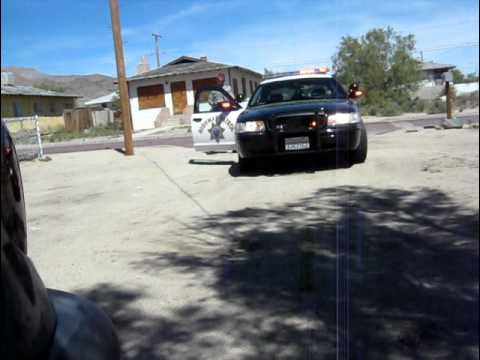
1 The “legitimate” ought to be redundant… unfortunately, aggression in our social order is so sysematic that the word “authority” is virtually synonymous with “power”. “A police officer has the authority to pull you over for a traffic stop” means that “the police officer has the power to pull you over for a traffic stop.” Our culture is infused with the Leviathan mindset that identifies authority and power. In other words, might makes right.
Legitimate authority is only given. It is impossible for legitimate authority to be forced becuase it is a contradiction of concepts. Forced authority is by conceptual definition illegitimate. Forced authority is slavery and I do believe slavery has been abolished except in controversies of personal injury or property damage.
Since you know this and have articulated the most important aspect of any controversy, what is the goal? Have you ever heard the phrase ‘he who writes the contract wins’? The goal is to write an unrebuttable contract (or if you prefer as it would apply to this thread… legal brief). On that same note, if you do write your own contract and lose… who are you going to blame?
A nice analogy. Let’s say the restaraunt owner in your analogy files in small claims court for non payment. Clearly there is no legitimate authority of a small claims tribunal if the restaraunt owner’s claim is not valid. This is the exact line of thought behind the debt validation movement. The only honorable response is, of course I will pay any valid debts owed to any legitimate authority collecting upon a valid debt… I only ask the debt be proven valid… and since I am writing this debt validity contract… this is the evidence I require. Is a traffic tribunal any different?
I dare say if you know a police officer has no legitimate authority to pull you over and you voluntarily pull over… you have legitimized the traffic stop. If you do pull over I suggest you have a list of evidence prepared in advance that the only reason you pulled over is because of a clear and present danger to your life, liberty, or property in order to rebut the presumption of legitimacy by your own voluntary actions. This shouldn’t be too hard to produce because the number of innocent people killed or injured by law enforcement is quite long and growing daily. I might also only affix my signature to any thing notating next to my signature it is signed under duress.
Usually when someone makes an argument they include supporting evidence… not contradicting evidence. Supporting evidence that something has no merit would be instances of it being ignored not instances of it being acknowledged. If it means nothing… why would it be scratched out?
In any event you pick out the lessor thing. You choose to ridicule the claim and not the evidence for the claim. Anyone can claim anything. Claiming duress in and of itself doesn’t mean anything. Anyone can claim a debt is owed. It doesn’t mean anything by itself.
If it can be demanded of a person claiming a debt to validate the debt it can surely be demanded of a person claiming duress to validate the duress… That is the part that counts, not something next to a signuature. I mentioned having your evidence of duress prepared in advance. It does not matter when you claim duress if the duress is valid but if you claim duress initially and maintain the consisentcy of your claim you do not create an opportunity for your claim to be challenged based upon your own actions or statements.