Apparently, he’s never read the 1040 Tax Forum Instructions - you can put any amount greater than the amount you owe on your 1040. There’s nothing stopping whiny bitches like Stephen King from paying more in taxes. The dishonest thing about this is that he’s putting it forward as if he wants more of his money to be taxed when, in fact, he is seeking to have more of other people’s money taxed.
Government has never been bigger, its revenues and expenditures have never been higher and and our upward mobility has never been so low. Hmm, so the obvious solution is to have more, bigger government.
I worked out the total cash tax burden by multiply each income quintile with the population within that quintile. The “hump” occurs right in the middle, around $60K/yr. The pile of cash put in by people making around $60K/yr. is much larger than the cash piles put in by the higher and lower quintiles. All the supposedly “progressive” tax policies have done squat to alter this. In fact, I suspect it’s arithmetically inevitable. And yet you have idiots like King yammering on about “fair shares” as if they have a clue what they are talking about.
JJ I’m going to have to “steal” that chart for my Tumblr, I seldom post anything political but that chart’s pretty awesome (and in turn direct anyone interested here for the source.)
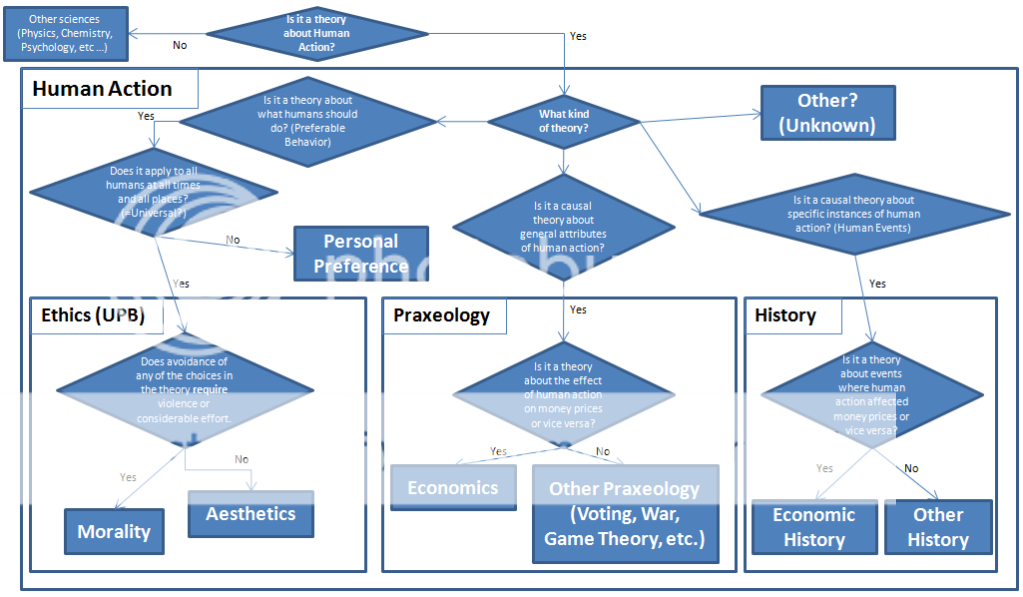
I want to note that I have a gripe with the made-up term “universally preferable behavior”. First of all, it’s less clear than “ethics” or “morality” which are already muddled words. Preferable by whom? And is it descriptive, as in, this is what people universally prefer? Or is it prescriptive as in “everyone ought to prefer these behaviors”? Is it deontological as in “you have a duty to prefer these behaviors (in yourself) because they are universally preferable” or is it consequential, as in “it is in your best interests that people around you behave this way, therefore, you should prefer that people behave according to UPB”?
Second, the meaning of “universal” is problematic. When evolutionary psychologists talk about human universals, they are clear to explain that they are talking about behaviors that exist in every culture and which are, therefore, indicative of some biological basis in the “hardwiring” of the brain that isn’t altered by cultural peculiarities. But what is the exact meaning of the “universal” in UPB??
Finally, it doesn’t get to the core fact that morality straddles two domains of study (which is a source of so much of the confusion about morality). On the one hand, it is a branch of aesthetics insofar as morality is an expression of the individual’s preferences regarding the decorousness of his own behavior and the behavior of others. On the other hand, it is a branch of praxeology insofar as morality is the study of what people’s actual moral tastes are - such study can be culturally universal, as in EP, or culturally-relative as in most of social science.
@Jack Roberts: Wow. That was an amazing talk. Mises is taking over the world.
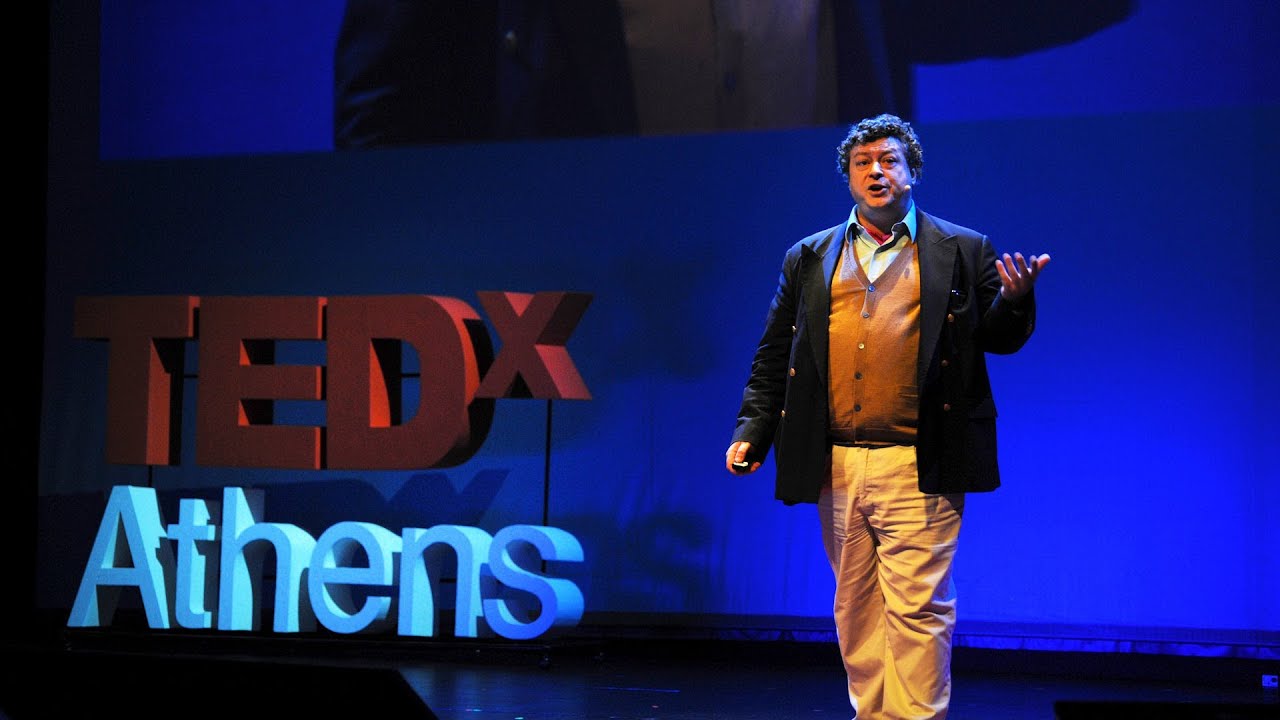
I’ve been thinking about exactly what this lecture addresses - how things make us feel is the central study of the science of human action. Economics is merely a better developed subject of study than the other subjects within the larger house of praxeology. The final end of all human action is satisfaction, which is a feeling or state of mind. From this simple observation, most of the edifice of modernity can be seen for the sham that it is.
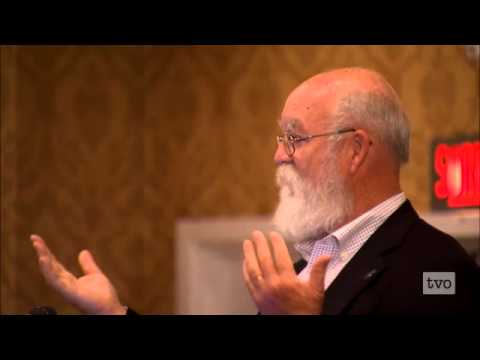
Modernism is obsessed with the Absolute, the objectivity of value. Numbers in spreadsheets are objective and measurable. So, numbers in spreadsheets are real by virtue of their association with the Absolute, whereas the feelings of the individual are merely an illusion, a magic trick (Dennett).
A lot of this has actually been highly entertaining - especially listening to the crowds reaction to the pro-Romney speakers. And the guys holding the camera have some fun commentary.
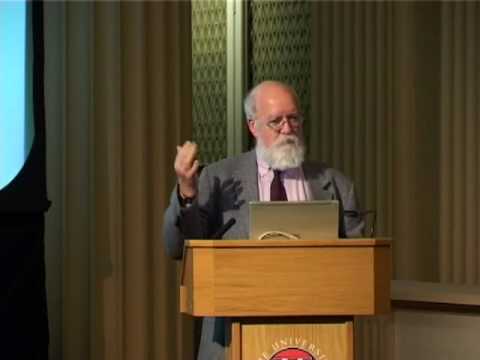
I’m on a Dennett-lecture binge today - I found this lecture to be absolutely fascinating and if you substitute the word “government” wherever he says “religion”, it would be pretty intelligible on Rothbardian terms! I think that the tone of Dennett’s analysis of religion should be applied to our discussion of the State. We need to begin analyzing how the State really works and try to answer the question how we can turn it to benign ends.
Much of what he has to say could be directly applied to the anti-state movement. However immoral and repugnant we can see that the State is, it’s here to stay for the time being and it does do things that need to be done. Answering the question “what will replace it” is part and parcel of packaging anti-statism for consumption by the masses.