Yes but how could you exercise something like that? By creating a ‘dictatorship of the yeoman?’
What? No. Simply by disallowing special privileges.
Could you expand on that please?
If there is a blanket prohibition against any special funding from state revenues or special contracts, there is no prize to be won by controlling the state.
Hmm. So what’s the deal with placing the yeoman at the forefront of all of this? Is it really revolving completely around tradition?
Probably because the yeoman is fairly far removed from any possible state privileges, and so naturally guards against them.
Do you think it could work if implemented?
(I feel like I’m interviewing you.)
Sure, if it stuck to its principles. But again, that depends on the character of those that make up the particular society. Unfortunately I have to go do some work. You can ask me more questions but I won’t be able to answer right now.
SM - History teachers often say that Federalists were pro-industry whereas democratic-republicans were pro-agriculture, but what are they really saying? That is this: D-Rs were against the tariff whereas Federalists were for it. This is no way means that D-Rs are against industry, they just don’t want their own money to be used to enforce higher prices against themselves, whereas Federalists do want their money to be used to enforce higher prices on them. D-Rs were ‘agrarian’ in that that they weren’t pushing special privileges for different classes of people. Since most people back then would have been farmers, it works out that the D-Rs were ‘agrarian’, but there weren’t domestic economic policies enforcing some agrarian vision.
This seems to actually be a way that leftists control debates, by implanting the notion that economic privilege means industrial development and wealth, whereas freedom means a bunch of buffoons pickadillying their days away without a robust national plan. To paraphrase Hazlitt: the savings incurred by spending less on consumption goods are then directed toward further consumption or toward further production goods via banking, producing an equal amount of economic activity but directing it towards purposes that are actually more highly needed by consumers.
And Jargon, thanks very much for the info.
US panel: China tech giants pose security threat
http://news.yahoo.com/us-panel-china-tech-giants-pose-security-threat-233519668.html
Lol.
Continuing the Jeffersonian democracy discussion…
I just found these listings on Wikipedia that document the core ideals of Jeffersonian democracy. If these are what Jeffersonian democrats believe in, then it is truly contrary to libertarian thought.
- The core political value of America is republicanism; citizens have a civic duty to aid the state and resist corruption, especially monarchism and aristocracy.
- Jeffersonian values are best expressed through an organized political party. The Jeffersonian party was officially the “Republican Party” (although historians later called it the Democratic-Republican Party.
- It was the duty of citizens to vote, and the Jeffersonians invented many modern campaign techniques designed to get out the vote. Turnout indeed soared across the country. The work of John J. Beckley, Jefferson’s agent in Pennsylvania, set new standards in the 1790s. In the 1796 presidential election he blanketed the state with agents who passed out 30,000 hand-written tickets, naming all 15 electors (printed tickets were not allowed). Historians consider Beckley to be one of the first American professional campaign managers, and his techniques were quickly adopted in other states.
- The Federalist Party, especially its leader Alexander Hamilton, was the arch-foe, because of its acceptance of aristocracy and British methods
- The yeoman farmer best exemplifies civic virtue and independence from corrupting city influences; government policy should be for his benefit. Financiers, bankers and industrialists make cities the ‘cesspools of corruption’, and should be avoided.
- The national government is a dangerous necessity to be instituted for the common benefit, protection, and security of the people, nation or community; it should be watched closely and circumscribed in its powers. Most Anti-Federalists from 1787–88 joined the Jeffersonians.
- Separation of church and state is the best method to keep government free of religious disputes, and religion free from corruption by government.
- The federal government must not violate the rights of individuals. The Bill of Rights is a central theme.
- The federal government must not violate the rights of the states. The Kentucky and Virginia Resolutions of 1798 (written secretly by Jefferson and James Madison) proclaim these principles.
- Freedom of speech and the press are the best methods to prevent tyranny over the people by their own government. The Federalists’ violation of this freedom through the Alien and Sedition Acts of 1798 became a major issue.
- The United States Constitution was written in order to ensure the freedom of the people. However, “no society can make a perpetual constitution or even a perpetual law. The earth belongs always to the living generation.”
- All men had the right to be informed, and thus, to have a say in the government. The protection and expansion of human liberty was one of the chief goals of the Jeffersonians. They also reformed their respective state systems of education. They believed that their citizens had a right to an education no matter their circumstance or status in life.
- The judiciary should be subservient to the elected branches and the Supreme Court should not have the power to strike down laws passed by Congress. The Jeffersonians lost this battle to Chief Justice John Marshall, a Federalist, who dominated the Court from 1801 to his death in 1835.
- The Jeffersonians also had a distinct foreign policy:
- Americans had a duty to spread what Jefferson called the “Empire of Liberty” to the world, but should avoid “entangling alliances.”
- Britain was the greatest threat, especially its monarchy, aristocracy, corruption, and business methods; the Jay Treaty of 1794 was much too favorable to Britain and thus threatened American values.
- France, at least in the early stages of the French Revolution, was the ideal European nation. According to Michael Hardt, "“Jefferson’s support of the French Revolution often serves in his mind as a defense of republicanism against the monarchism of the Anglophiles.” Napoleon, on the other hand, was the antithesis of republicanism and could not be supported.
- Louisiana and the Mississippi River were critical to American national interests. Control by Spain was tolerable; control by France was unacceptable. See Louisiana Purchase
- A standing army and navy are dangerous to liberty and should be avoided; much better was to use economic coercion such as the embargo. See Embargo Act of 1807
- The militia was adequate to defend the nation. But it proved inadequate in a major War of 1812 when militia units refused to leave their state to attack the British.
“Empire of Liberty” and economic coercion? Please.
You may have seen this elsewhere, if not, I’m sure many of you will appreciate it. If you’re not up for watching the whole thing, at least watch 6 minutes in:
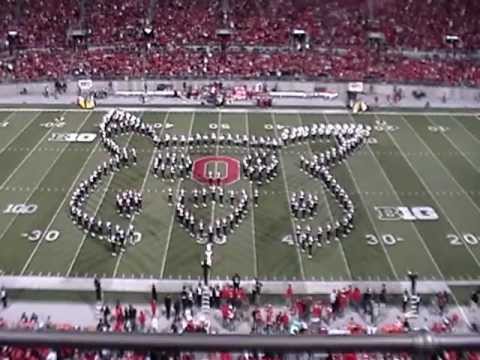
Just came across these guys today:
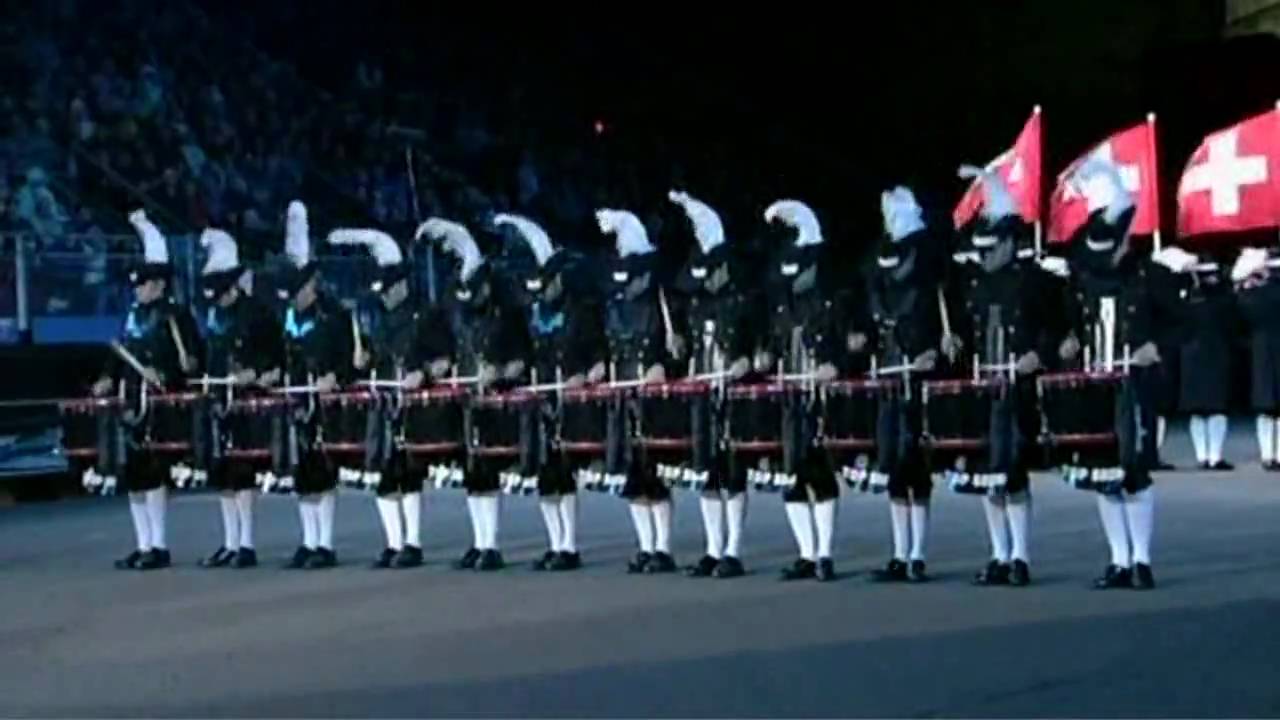
Clayton -
Princeton economist says Obama misrepresents his study of Romney’s tax plan:
Flaws allow every 3G device to be tracked.
Herp-derp-derrrrp. What do you think they’re doing with all those PATRIOT Act powers and the data-center in Moab that can archive the entire Internet 1,000x over?
Clayton -
@Clayton (or anyone else that may know)
Are there even any non-3G capable cell phones?
New $100 note has hidden message relating to gold