Tom Woods and everyone else I asked recommended reading Man, Economy and State over Human Action first. The primary reason is that Mises assumes much more knowledge of philosophy on the part of the reader in reading his work than Rothbard does in his work. In fact, the point of publishing MES was to make HA easier to understand for college students. This is not to say that Rothbard offers no original analysis and does not expand on or critique Mises’ arguments- he does do this.
One way you could go about it is doing the following: every time you see a reference to a specific part of Man, Economy and State in another work, read that section in order to familiarize yourself with parts of the text. This way you can dip your toes into the work before a full reading of it. You will already be familair with some parts and reading the referenced parts, as well as the book which refers to them, can help clarify any passage that is complicated on its own (on its own meaning: without reference to the original book which referred to MES in the first place). The part in MES and the text which refers to the part should supplement each other, making the concept in question easier to understand. When you feel confident in your ability to read MES, you can do it side by side with the study guide, as you indicate you will do in the future, which is available for free. The study guide summarizes each section and poses questions on each section in order to promote understanding of the text.
The study guide itself is not enough to really give you a good idea of what is being said. Rothbard will often go in depth about issues that Murphy will spend a minute on or not even mention. It’s a good little complement to the book but it probably won’t teach you that much on its own.
NYT suggests that Iran can’t print enough money. I find the uncharacteristic honesty in describing the role of monetary inflation in statecraft to be refreshing:
Is that so? Of course, this is only true of the Iranian central bank with respect to Iranian foreign policy and could not possibly describe the actions of the Fed as they relate to USG’s foreign policy.
@Neodoxy I’m planning on reading the study guide with Man Economy and State, in the format of chapter-study guide-chapter-study guide-chapter-study guide etc.
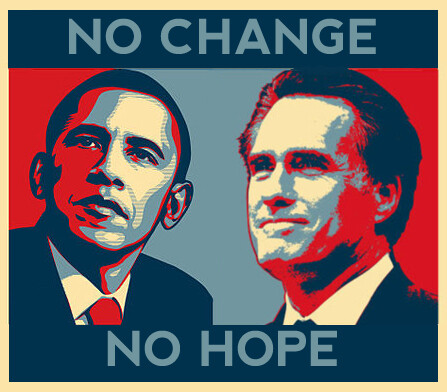
By not voting and convincing others to do the same you are chipping away at the walls of the concentration camp (the legitimacy of the election “winners”). Voting turnout is already around 40%. Could an election “winner” still claim legitimacy after a 20% election turnout? The other 80% don’t even have to become voluntarists for this to work. All is needed is a conviction that elections don’t make a difference on the things that really matter (central banking, handouts to cronies under the pretense of warfare/welfare spending, etc.).
By voting, you increase the turnout % which makes it easier for the “winner” to claim legitimacy.
Woods may not fully understand the import of public choice theory. It’s not so much that voting is bad as it is utterly inconsequential (at least, at the national and most State levels, and even at some county and municipal levels). Turnout, then, is a “thermometer” that tracks the gullibility of the general public to the pretense that voting matters.
Reducing turnout should not be an end in itself but I think it is an inevitable byproduct of a widespread and growing realization of the facts of public choice theory on an intuitive level (that voting simply does not and cannot make any difference).
“@Neodoxy I’m planning on reading the study guide with Man Economy and State, in the format of chapter-study guide-chapter-study guide-chapter-study guide etc.”
Ah, I see. Alright, that’s not a bad idea at all. Indeed it makes the work infinitely more readable
@SM - so basically: “Hey I’m a Jew and I’m so special! Look at my ethnicity/religion woooo!” Besides, if you’re a Zionist you have about as good a chance of being a libertarian as a camel does to pass through the eye of a needle.