A previous thread got me thinking about the philosophy of science. Do the Austrians have a distinct position on this subject? Clearly, they’re opposed to the positivist approach. I find operationalism à la Percy Bridgman to make a lot of sense; what do you guys think? Point me in the direction of any published Austrian literature on the subject.
From interactions with various Austrians, it appears there may be no 100% consensus. Some may suggest positivism is fine for the physical sciences, but not the social sciences, while some dismiss positivism all together.
I know that Hayek was sympathetic to Popper’s view of science. Beyond that, I’m not aware of any Austrians who enunciated a distinctive approach to the subject. Perhaps this is because the question is largely beyond the scope of praxeology.
I’m interested in this topic a lot as well. I don’t even have a clear definition of what positivism is, and certainly not a clear understanding of the philosophy of science in particular.
Some clarifications can help. D=
New Oxford Dictionary suggests (bold emphasis mine):
Science
the intellectual and practical activity encompassing the systematic study of the structure and behavior of the physical and natural world through observation and experiment : the world of science and technology.• a particular area of this : veterinary science | the agricultural sciences.• a systematically organized body of knowledge on a particular subject : the science of criminology.• archaic knowledge of any kind.
The overarching definition implies positivism, since positivism has to do with experience (observation and experiment). Initially, science was used in bullet point 3, just knowledge in general. We can come to know knowledge through experience or deductive reasoning. The term science now comes to mean the former rather than the latter. I would argue this is where the philosophy of science comes in. How is science to be understood and how is knowledge to be gained?
An execellent course on the philosophy of science is the Teaching Company title Science Wars: What Scientists Know and How They Know it.
Here’s the little I know about it:
- From Wiki: Positivism is a… philosophy of science which holds that the only authentic knowledge is that which is based on sense experience and positive verification.
Which means introspection counts for nothing. And of course tosses all of praxeology right in the garbage can. Positivism is nonsense, of course.
-
Philosophy of science: If something happens often enough it will keep on happening forever. This is called induction, and sounds like pretty shaky reasoning when you think about it. In fact it has been attacked to shreds. The only thing it has going for it is that it works.
-
A fellow called Popper decided that for something to be a valid scientific theory it has to be refutable. Sounds good, right? Pretty basic, no? But according to that, once again “irrefutable” Praxeology is not science at all. Meaning not truth. I think the two are reconcilable somehow. Maybe if all of humanity sat there doing nothing forever a Martian would be able to declare the action axiom false. So that it, too, is refutable.
-
Another thing people worry about is “Is the real world really real?” I don’t think this deserves serious consideration.
Is not sitting doing nothing an action in itself;)?
Not if you are tired and can’t stand.
Egh… maybe some positivists. But Rorty and Ayer, the two giants of Logical Positivism, both state that a priori statements are tautological, such as “2+2 = 4”, and “human action is purposeful”. That is, their validity comes from virtue of their symbols, rather than the real world. They claim that tuatologies don’t actually contain any information, which is why they aren’t “truths”, though tautologies may be significant to human beings for psychological reasons, namely for our inability to instantly realize the results of math equations / human action.
In philosophy, I find “truth” to be kind of a fetish. Positivists could simply call their truths “empirical observations”, and rationalists could simply call their “truths” tautologies, and then we could all agree.
This is actually funny. Arguments against induction rely on an inductive premise. Induction has failed in the past therefore it will continue to fail in the future 
That sounds pretty dismissive. And wrong. How does the statement that the summation of a certain infinite series is equal to pi come from the virtue of the symbols? It comes from the assumption of initial axioms and the rules of logical thinking.
And to say they don’t contain information sounds very strange, too. I mean if they are significant [as you wrote] and help us do stuff like build houses that won’t collapse, in what sense don’t they contain information?
Also, it’s a very new use for the word tautology. It seems to include anything deducible. But in that case, why redefine tautology to mean that? The old use of the word tautology is a statement of the form A is A. I smell an agenda.
And it what sense is it untrue to say 2+2=4? After all, a well formed statement is either true or false. So if 2+2=4 is not true, then it’s false. Where will this all end?
Maybe “deductive truths” would be less insulting than “tautologies”.
I hope you mean funny but accurate.
I disagree with what you write here.
assumptions:
-
every statement is assumed [defined?] to be unproven until it is proven.
-
it remains to be proven that if something has happened often in the past, it will keep on happening.
There is no inductive premise [like the one you mentioned] needed.
Straight from the horse’s mouth:
The subject matter of praxeology is human action. It is not concerned
with human beings who have succeeded in suppressing altogether every-
thing that characterizes man as man: will, desire, thought, and the striving
after ends. It deals with acting man, not with man transformed into a plant
and reduced to a merely vegetative existence. [Mises in Human Action].
So there you have it. A vegetative existence is not acting. So if the Martian saw all humans sitting there vegetating forever [maybe you have to throw in since the beginnjin gof time], the action axiom would be refuted.
For the record,
Popper proposed that falsifiability (not “refutability”) be used as a criterion to demarcate scientific from non-scientific theories. A non-falsifiable theory may be true and worthwhile. To deprive a theory of the “scientific” moniker is merely to say that it cannot be contradicted by a basic statement. A basic statement is usually an interpretation of some sense experience, such as “there is black swan,” or “there is not an elephant in this room.” However, a basic statement is really just a proposition expressing some existential facts. We may accept a basic statement as true without ever actually experiencing the expressed fact directly. Ultimately, such “direct” experience is illusory, since all empirical observation is sense experience interpreted in the light of theories, what Quine called “auxiliary hypotheses.” What is more, some of the auxiliary hypotheses, i.e. unstated assumptions, necessary for any falsification are themselves unfalsifiable. Popper recognised this, and that is why he embraced metaphysics.
Very few people seem to understand what a tautology is.
Just because a proposition is tautological doesn’t mean it describes anything that exists in the real world.
Is the proposition “all swans are white” a tautology? Most would say no. However, what if we define a swan as a white bird? In that case, “all swans are white” is a tautology no less than “the shortest distance between two points is a straight line.”
The trouble is that such semantic tricks do not satisfy empirical questions. Okay, all swans are white, by definition, but do swans exist? If a black member of the species of birds we have been calling “swans” is discovered, then no species would seem to satisfy our definition of swans, i.e. swans do not exist.
Any claim about reality can be reinterpreted so that it is a tautology, the outstanding question is then whether the thing being described actually exists. Although “the shortest distance between two points is a straight line” is tautological, it doesn’t follow that reality must follows the same rules as Euclidean geometry. (“the shortest distance between two points is not a straight line” may also be tautology, but just of an alternative geometry).
The axioms of praxeology can be wrong about reality. The world could exist so that no acting being (as Mises described one) could ever exist. Before the evolution of such acting beings, the axioms of praxeology could be said to have been false for our universe. However, even so, the axioms of praxeology would still be tautologies if defined in a tautological form.
This, seriously.
Yes. Those symbols are defined and used within a system of logical thinking etc, but mathematical statements still depend entirely on their definition, and only on their definition, for truth.
Ayer says that to a being on infinite intelligence,
- 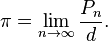
would be obvious. But to humans, it isn’t. So we have to go through and painstakingly derive it step by step before it becomes obvious to us. It seems the only tautologies human beings can readily accept as self evident are x = x, and 2 = 2, so x-2 = x-2.
But 2+2=4 is A = A. You might argue that 4=4 is really a better case of this, but 2+2 is also a definition of 4.
Yes, as far as I can work out, they’re being really churlish about what they call truths etc.
This is pretty good. What do you mean by proven?
-
I was taught that four is defined as “the number after 3” [with a lot of work done defining “after”]. So that 2+2 is not a definition of 4. One has to prove that 2+2 is the number after 3.
-
What do I mean by proven? I was wondering that myself. I suppose it depends on the context. Since we are talking about the real world here, I guess it would mean something like “demonstrated as true to the satisfaction of the intellectual community.” Sorry, that’s all we have. I hope we arent going to have to define the words in that definition.
In any case, however we define proof, the definition will [should] imply that no statement comes into this world proven. It has to be proven to be proven.
- Just a note to Mr Kelly. I confess both your posts to be way beyond me.
But Rorty and Ayer, the two giants of Logical Positivism
Ok, so wait, Rorty was a logical positivist now too?
“Ok, so wait, Rorty was a logical positivist now too?”
I think Ayer recanted positivism in later life too.
This is why i was careful to say “a” definition. 4 being defined as the number after three does not exclude 2+2 from being its definition as well.
Sorry, Braindamaged here, what i ought to have said was:
This is inductive. You don’t know that it remains to be proven. You can’t show a priori that it will never be proven in the future, etc etc. And I don’t know this doesn’t prove inductive logic, but it doesn’t exclude it from being proven sometime in the future.
Anyway, I don’t think inductive logic reveals “truths” or anything. You just can’t exclude inductive logic from having any properties other than those necessarily entailed by its definition.
sigh I don’t know why we can’t just call inductive logic inductive logic: conclusions derived from extended observation, and leave it at that. That should be good enough for everyone. No amount of bickering in the philisophical community is going to make it any more, or any less, than that.