Just the categories that they use. Subjects, objects, verbs, nouns, adjectives, verb phrases, tense, prepositions, noun phrases, grammatical voice, aspect, pronouns, deixis, articles, modality, conjunctions, and so on, I think that all of them are just confused, muddled, fuzzy categories that we could define in a much better way, or just throw away. I think that the problem is that they look at the overcomplicated, messy surface of the natural languages, and assume that everything about it is useful, because they see the natural languages as the ultimate givens, as the unquestionable foundation of their science, but that most of it is what I said it is, an overcomplicated mess. I have seen some of the magnificantly simple design underneath the ugly exterior of the natural languages, but I don’t think that most linguists have even gotten close to it.
Why can’t you post what you think about it, but also wait for someone like John Ess to weigh in?
Because I don’t know what exactly “it” is.
Meanwhile, could qzw articulate “they see natural languages as the ultimate givens” a little more clearly? I would say nothing is given. All symbols, including words, are just conventions that have some more or less vague meaningishness to each party to the conversation via experience with that conventional usage, so they come in handy when something is not obvious in the context from speaker to listener. In other words, when the speaker believes the listener needs additional guidance in reproducing the speaker’s thoughts in his own mind, because the context isn’t enough.
Me and qzw could form a new language right now. In fact, qzw might have realized I am already doing that. What does “qzw” mean? Some might say it obviously means “you”, but that is a meaningless assertion - there is no such thing as meaning in a vacuum, there is only a speaker’s intention and a listener’s interpretation. Some may then say that by “qzw” I intend to indicate that same thing as when I say “you”, and that is correct. That is what I intend by it. But how it is possible for any reader to know that? Well, strictly speaking, it’s not. It’s just that interpreting “qzw” as “you” makes my message make the most sense. For all anyone knows, if I hadn’t admitted so above, I might have meant something entirely different by it. There is no way to know another’s intent absolutely, only to “know” usefully. (This is tying back into the Mises/Quine thread) I contend it is through this very same process that we learn all words, and all grammar.
Here’s a little more of my thoughts since I’m bored waiting for John Ess.
From the perspective of human action, I as an individual use words to better my state of affairs. I utter “seven” on the phone with Suzy to communicate my intention to meet her at 7pm tomorrow, because I believe the state of affairs where Suzy knows of my intentions to meet her at that time is more satisfactory to me (because we can meet without confusion, etc.).
But before I uttered “seven” I had a more detailed thought in my mind that I wanted to convey, namely my intention to meet Suzy at seven. In the context, I judged that only that one word was necessary for her to guess my intent. That one word crossed the inferential gap. If there were even more context - say, I always meet Suzy at 7pm - I could have simply said nothing. No words would be needed to get that meaning across.
Why do we both know what “seven” means? Because, one way or another, we both figured out long ago that there is a convention most people in this area follow, and that is that they indicate the concept of 7 by uttering the word “seven.” Just like they indicate that something is acceptable by making the “thumbs up” gesture, or indicate “bird” by another hand gesture, or even indicate the concept of 7 by raising seven fingers.
OK, so what are words? They are spoken or written communication devices for filling in whatever portion of the speaker’s thoughts the speaker deems the listener unlikely to guess (that is, reproduce in her own head) from context. Keeping in mind, of course, that the listener could be the speaker’s own self a few moments later - that is, words can also be used internally as a memory aid.
Of course we can’t treat words completely without treating thoughts - the stuff of thought as Pinker puts it. The stuff of conscious thought is sensations, and I maintain that this is true by definition of conscious. Conscious means aware. Aware means experiencing. Experiencing means sensing. What we call conscious thought is exactly that thought that we are sensing, otherwise we would not be conscious of it. I think we reject this only because it seems obviously wrong. “Where are these thoughts? You say I sense them, but I do not!” My reply is that you do, but you forget them so fast that at any given moment you usually cannot recall them - and that’s a good thing or else your short-term memory would be constantly overloaded with thinking patterns (very brief pictures, sounds, bodily sensations, etc.) that you mastered long ago.
This is not merely academic. The implications for the future of communication are immense, completely game-changing as a species. We are close to mapping the cerebral cortex and being able to output that on a screen. Although the output of our visual reasoning would obviously be all different, because for one person a crinkly image in the upper-left of their visual field means its a happy memory and for another perhaps an imagined future. But when children grow up with this system and learn to standardize their thoughts to the visual communication conventions that develop, then we have finally eliminated the word barrier, that awful corrupting influence of these linear, vague, slow words that don’t carry nearly enough information to even adequately correspond to thoughts, but that we have had to rely on all this time. Words are a tremendous bottleneck to communication, but we hardly ever notice because we are social creatures and especially for academics, every thought they think they are eager at some level to put into words, because it is only once put into words that these thoughts, if insightful, can earn him the recognition of his fellows.
I don’t think it is easy to visualize just how big of a change this would be. Imagine being taught math by directly seeing how a great mathematician pictures a concept in his brain. Since thinking literally is sensations, such as visual ones, this seems to have the potential for getting close to mind-to-mind communication once the conventions are adequately synchronized among the population. To see exactly how a visual thinker visualizes something is to, once you are familiar with his internal tagging scheme, understand what he understands, in some sense. And we’ll still have words on top of all that!
From the perspective of human action, I as an individual use words to better my state of affairs. I utter “seven” on the phone with Suzy to communicate my intention to meet her at 7pm tomorrow, because I believe the state of affairs where Suzy knows of my intentions to meet her at that time is more satisfactory to me (because we can meet without confusion, etc.).
But before I uttered “seven” I had a more detailed thought in my mind that I wanted to convey, namely my intention to meet Suzy at seven. In the context, I judged that only that one word was necessary for her to guess my intent. That one word crossed the inferential gap. If there were even more context - say, I always meet Suzy at 7pm - I could have simply said nothing. No words would be needed to get that meaning across.
Why do we both know what “seven” means? Because, one way or another, we both figured out long ago that there is a convention most people in this area follow, and that is that they indicate the concept of 7 by uttering the word “seven.” Just like they indicate that something is acceptable by making the “thumbs up” gesture, or indicate “bird” by another hand gesture, or even indicate the concept of 7 by raising seven fingers.
OK, so what are words? They are spoken or written communication devices for filling in whatever portion of the speaker’s thoughts the speaker deems the listener unlikely to guess (that is, reproduce in her own head) from context. Keeping in mind, of course, that the listener could be the speaker’s own self a few moments later - that is, words can also be used internally as a memory aid.
Here:
I have to go for now, but I will get back to this tomorrow.
Well I don’t know that linguists say that. Is there really a linguist who does not admit that the technical English of an engineer is not any more useful for engineering than regular everyday English?
Probably not, but that doesn’t go against what I am saying. Engineering is a way of life!
I can’t tell which side you are on. You seem to be doing that Mises thing where he speaks directly from the POV of the opposing side. It’s a nice rhetorical device but it gets really hard to tell which statements are meant to be yours and which are meant to be an exposition of what you’re critiquing.
I have seen you write in the past that you don’t think with words, but that you think with pictures, sounds, feelings, and so on. I used a few years ago to also be like that, but I have for some reason since moved back to relying a lot on words in a lot of my thoughts. I remember that I talked a lot back then with one of my friends about how we didn’t use words in most of our thoughts, and how that was for some reason superior. I’m not entirely sure why I changed, but it might be the fact that I nowadays spend so much of my time thinking about language, that I just end up spending a lot of my time thinking with language, though I still know of a few related circumstances in which I wouldn’t ever think with words, such as while playing chess, tennis, or an RTS.
I have also seen you admit in the past that thinking with pictures, sounds, feelings, and so on, doesn’t seem categorically different than thinking with words, because both of them are just symbols for what you are thinking about, but I don’t think that you grasped the implications of that point.
I first want to give a definition of what language is, and explain why we need it.
Why people use languages is to exchange their ideas with each other. Because it is of course not possible to directly connect the private world of somebody to that of somebody else to directly pass ideas back and forth between them, it is our only option left to acquiesce to a roundabout means. We express ideas, which are of our private world, as visuals, sounds, or whatever, which are of the public world. One person “encodes” one of their ideas into a sound in the range of an other person, and then the other “decodes” that sound back into an idea; the other “encodes” one of their ideas into a sound in the range of the one, and then the one “decodes” that sound back into an idea. They communicate.
It isn’t possible to get away from that arrangement, even if we build something like what you are talking about. It would still be necessary that the people would be encoding their ideas into visuals, sounds, or something else of the public world, and that the other people would be decoding those visuals, sounds, or whatever back into ideas. We wouldn’t be able to get away from the fact that we have to translate things of our private world into things of the public world and then back again to communicate with people. It isn’t relevant what we do; we always will have to contend with that situation. It is an ultimate given.
I think that your reaction against words doesn’t apply to words in general, but only to the particular words that we use. What would make using pictures, feelings, or whatever more effective than using words? No matter what, you are still dealing with using symbols to mirror your thoughts. I think that your problem is with the particular words, because they evolved mostly as a mirror of the minds of ordinary people, and because of that tend to be pretty ambiguous, vague, and whatever. There isn’t a reason why you couldn’t build words that mirror your thoughts, instead of relying on the ordinary, fuzzy-headed masses mirroring their thoughts, and then using those words. I don’t think that the masses have any problem using words, simply because those words are about as vague as their thoughts. But we might have problems using them, because we try to make our thoughts a lot more specific and unambiguous than that.
I mentioned this in a thread a while ago, and you disagreed, but I think that the future of communication, at least between people like you and I, will be with constructed languages, instead of natural languages. The natural languages, including English, Spanish, and so on, are overcomplicated, vague messes, which conceal on their ugly surface the possible power and simplicity of a system mirroring our thoughts. I think that a lot of the errors that people make, even very intelligent people, and a lot of the miscommunications that people have with each other, would disappear if we were to have a well constructed language to use. So many of the absurdities and miscommunications that people fall into are just the result of the messy tool of thought and communication that they are using, their natural language, and people like you might tend to even go as far as abandoning their natural language as a tool of thought, because it is so messed up.
I almost daily find myself in situations in which I say something to somebody that I don’t expect to pose a problem, find that their response reveals that they completely misunderstood me, feel handcuffed because English doesn’t really have any way of fixing the miscommunication in less than like 500 words or something like that, but then realize how easy it would be to make that distinction in a well constructed language. I see the limitations of English and other natural languages everyday, but I don’t blame words; I blame the terrible designs of the natural languages in particular.
I think that my previous post will reveal which side I am on, but I will spell it out anyway. I don’t see the natural languages as ultimate givens. I think that they are overcomplicated messes, and I think that we have a lot of room to not only criticize them, but improve on them. It is silly to say that one part of a language couldn’t be better or worse than the corresponding part in an other language, but that it is the orthodoxy in mainstream linguistics.
It doesn’t even matter whether somebody wants to criticize languages or just wants to describe them. It is fine if they just want to describe them. But the problem is that in seeing the natural languages as the ultimate givens, they end up studying history without a systematic theory of interpretation, and just end up messing the whole thing up anyway. So I’m not saying that linguists should stop being descriptive, and start being prescriptive, but that their point of view makes them blind to the fact that it is possible to say whether a language is better or worse than an other, and whether a part of a grammar of a language is more or less useful, and that, if they were to change their attitude, and instead not see the natural languages as ultimate givens, they would not only be able to see that possibility, but would also be able to describe them a lot better, whether they want to prescribe anything or not.
Here is a good example of the attitude that I am talking about:
I use words in my thought process almost all the time, too. What I mean to say is that I don’t need to (and am actively trying to kick this relatively recent habit). It’s a weird custom - highly corrupting and slow on the one hand, yet of constant help when you want to explain things to others.
I think the reason is that we are social creatures, as I mentioned. It has been deeply ingrained in us from an early age that only what can be expressed really matters. My answer to that social pressure is that even if that is the case, there is no reason to require that every step of the process along the way to a great idea has to be easily expressible. As long as the end result can be expressed, that seems fine. I would probably have never arrived at most of the best ideas I’ve had if I had required my thinking to be expressible in words all along the way.
There’s nothing wrong with using words necessarily; they can be useful as memory aids or waypoints in one’s thoughts. But trying to put every last thought into a sentence that would be intelligible to another person is, I think, way too much. Words simply do not have enough content to capture the depth and subtlety of a thought in a succinct enough manner to be efficient when it matters. In general, a line of reasoning that takes five seconds of thought can take anywhere from one sentence to 20 pages to fully elucidate and clarify, yet if it happens to take 20 pages the chances that the reader will ever really grasp it as cleanly as you do fall to almost nil.
First of all, they are not symbols for what I am thinking; they are what I’m thinking - the sensations are conscious thought. Now it get’s complicated because there is an interface between conscious and unconscious, which is itself a fuzzy threshold, so the word “thought” becomes somewhat ambiguous.
The difference between sensations (pure thoughts) and words in terms of subtlety, accuracy, clarity, efficiency, and “resolution” (amount of data in a single thought) are staggering.
100% agreed here.
If it’s really possible to scan my visual cortex and see exactly what I’m seeing, so that if I looked at the monitor I would think, “Yup, that’s exactly what I see on the visual field of my mind,” then what you wrote here would not be correct. It hinges on whether it’s really possible to do that. It may be that the scanned content differs in some important way, even from my subjective point of view. In that case, you’d be correct. However, we don’t know that that’s the case.
See above. If we don’t get this aspect of the discussion straightened out, we cannot really get anywhere. Please let me know if you don’t agree with what I wrote here and in the Mises/Quine thread about interface between conscious and unconscious.
Technical terms are less ambiguous. In fact, for any given context it is probably possible to develop an efficient language that I would probably not object to commingling with my own thoughts, but it would be purpose-built for that context. It would not be very useful in most other contexts. Words are vague not only because people are vague thinkers (for instance, the language that math people use is much less vague), but because the words must serve many purposes. That is why coining specific terms for specific purposes is so useful, hence the phenomenon of jargon. The masses can only learn so many words by the time they reach a given age. So they tend to use them in an even more imprecise manner than necessary. Someone who knows more words and chooses their words better can communicate more accurately, just not perfectly of course.
Technical grammars would be even more useful, but few people - besides perhaps lawyers - seem to do that. Also note that there are languages such as Japanese where a main feature compared to English is that it seemingly goes out of its way not to be clear. Vagueness is seen as a benefit (because it’s polite and socially sensitive), although Japanese can be used in a precise manner as well.
Naturally, the average conversational interests of the population that spawned a given language will determine how precisely it carves up various parts of concept space. The language of intellectuals in general is more precise than that of the lay person, but much more precise in their given field, and more precise still in fields and schools of thought where rigor is highly regarded. Still no one goes too far in changing language, because it would create too a high a barrier to entry into the field and preclude all possibility of mutual understanding, in practice, especially for outsiders trying to break into the mainstream. (But in fields where everyone agrees that it really really really matters, they do: mathematics being the prime example.)
One could certainly overcome these problems and create a language that is all-around very accurate for parsing logical distinctions in its grammatical structure. But realize that the problem of logical error generally stems from semantic ambiguity, and that cannot be eradicated until every last word is clear and disambiguated enough for the purpose at hand. For example normative rights, legal rights, de facto rights - these are clearer than just “rights,” and clear enough for Long’s purposes, but not nearly clear enough for all purposes.
What I don’t think you have yet realized is that, although you may be right that some tweaks to the structure of language could yield major improvements, the only way one could ever be perfectly clear and avoid leading oneself and others into logical errors in verbal discourse is to carefully define all your terms before you use them, creating new ones as needed, and that this process can go on nearly forever. To put things as clear as I want for deep levels of analysis will require me to leave no English word unaltered, and to coin scads of new jargon on top of that, and even to alert the reader to special non-standard grammatical constructions I have made. Well, there is your new and improved language; the problem is that will be nearly useless for discussing things at an everyday level of analysis.
Words are simply too low-resolution, not to mention that they are linear. An artist may be able to imagine at least part of this painting in full resolution in his own mind.
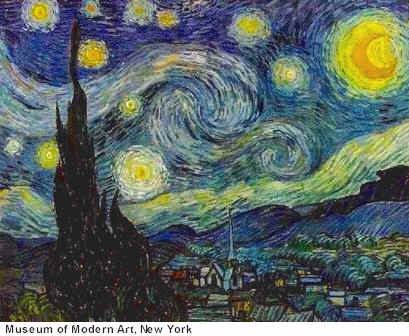
But how many English words would it take to convey it well enough to someone on the phone, so that they could reproduce even one small part of it exactly? A new language made for just that purpose would of course shave a few years off the process, and one purpose-built for van Gogh’s unique style might actually make the process go by in a matter of hours or days. But what use would this new language be for other tasks? Probably almost none. Yet the direct thought in pictures is instant and perfect.
Now of course I’ve made my task far too easy by choosing a picture. But how about something like the proper form for kicking a soccer ball? It would take ages to explain this perfectly in words, and by the end the listener would probably have a totally mangled interpretation of what to do. Yet if I can visualize the same thing - as I must already be doing in order to explain it! - and I can show you that visualization on a monitor, you can see it. I could even show you how it feels from the first person perspective, which muscles contract, etc., if the technology ever gets that far. People already know this, which is why they use visual aids, like this one from another thread:
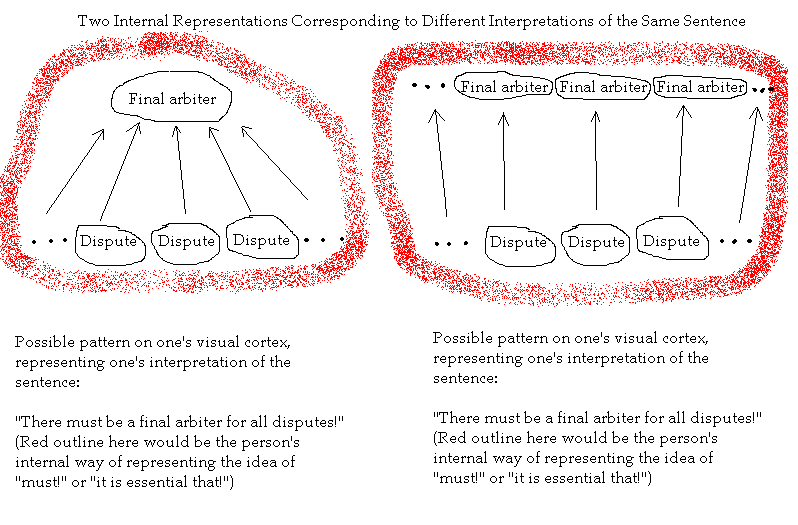
Naturally, if our language distinguished this semantic ambiguity better, it would be superior for discussing polycentric law. I fully agree. There are many changes I would make to English if I could get everyone to accept them. But there are limits to what such a program could accomplish, and I’m sure you agree about that, but I don’t think we yet agree on where those limits lie.
I completely agree with your analysis of people’s thinking errors in that they mostly stem from language ambiguities. As for “constructing” language, I think we are being put on by just such an ambiguity at this very moment, because in some sense you could say that all languages are constructed. If us forum members invent a more precise language and it catches on among people interested in precision, they will surely make modifications to it for their specific purposes, and it will be out of our hands so to speak. Perhaps English developed in the same way in a small group of people with specific communication needs.
Note also, there is a sort of calculation argument to be made here, not necessarily against what you have written, but elucidating to the issue at hand:
It isn’t possible for us, as central language planners, to know all the possible distinctions and subtleties that everyone in every field of discourse will need for their own communication purposes. To do that, we have to know about every field, every hobby, every culture with their different emphases on various aspects of things. Too many words and no one would use it. Too many grammar words and no one would use it because every sentence would be too long. There is also robustness (ease of comprehending mangled or misheard utterances) to consider, English being a particularly robust language probably because it had so many cultures speaking it. This doesn’t mean that we cannot make improvements, but I suspect they would be limited to grammatical structure for the above reasons.
And we may find unintended consequences. Since language is a natural order, it has evolved to be useful for the communication needs of people using it. Academics have evolved more precise languages for their purposes, and specific fields such as logic and mathematics have developed even more precise languages. Yet the language of mathematics is of limited usefulness outside the field, although I have on occasion explained something in an everyday context by saying, “It’s a necessary condition, but not a sufficient condition.” Still that is normal English, just used more precisely than usual.
Math people will note that the final arbiter example above is also clearly delineated in the definition of a limit in calculus: “For even epsilon > 0 there exists a delta > 0 such that … [a given condition is satisfied]” meaning it’s not that there is one delta that satisfies the condition for all epsilon, but that for any epsilon you give me, I can give you a delta that satisfies the condition based on that epsilon. In other words, the picture above, but where delta is “final arbiter” and epsilon is “dispute.”
So additional accuracy is there for the fields that need it; if you just want a language that is more accurate for logic, study mathematics because they have it! If you want one that’s more accurate for praxeology, study Menger and Mises, and then coin less unwieldy terms - of course at the cost of the ideas being less intelligible to outsiders, since people will only tolerate so much jargon (and very little grammatical jargon).
In other words, it’s virtually the case that the very study of a field, at least when doing it rigorously, itself entails the creation of the new language necessary for elucidating it. The problem is that scholars rarely take this too far for fear of not getting anyone to read their abstruse writings. Hayek invented the words nomos and taxis, and he could have invented many more, but people just don’t like a lot of jargon so that is why there has been a limit. Going in like a central planner and telling everyone, in effect, “You must learn my jargon and system of speaking so that you will be able to access these works,” doesn’t seem to go over well, at least historically. After all, even the most respected philosophers couldn’t get away with that much on these fronts. If anyone, it would be them who could get people to accept their modifications to the English language, but even they achieve so few. Do you see the problem?
So the game is not to come up with a better language, but actually to get people to learn it, meaning the real challenge is to either somehow motivate people to learn it - and historically that has proven extremely difficult - or make substantial advances in teaching methods so that people could learn these new languages or modifications quickly and painlessly enough that they would be willing to do it.
In other words, it’s not about being able to cook a better hamburger than McDonald’s; anyone can do that. It’s about making it cheap enough, accessible enough, and proven enough by reputation that people will invest resources into acquiring it.
Well I agree that words suck for communication, and that better languages would be much better for given purposes. My response to that is above. And furthermore, although you are indeed correct that words could be much improved, a linear system of words will always be pretty paltry relative to pure thought, no matter what. Carefully constructed languages have done wonders for all manner of technical fields, but none can match the power of diagrams - and consider that that’s despite there not really being much standardization in visual communication. I think if you want to design a better language, make it mostly visual. Conventionalize the visual system into a language. I think this is the future, although I’ve barely outlined the case for that yet. I hope to later.
@last sentence of last post: Not if you’re this guy (the guy Pinker describes at the beginning of the video).
Clayton -
I will try to write up a detailed response later, but I first want to point something out. I’m not proposing to construct a new lexicon to use. I’m not proposing that we try to construct a lexicon of unambiguous words for people to use in their conversations. It is the job of decentralized, cultural evolution to develop the words that we use to mirror our thoughts. If people have vague thoughts, the constructed language would develop vague words, if people have precise thoughts, it would develop precise words, and, if people have both, it would develop both.
I am proposing something much different, but I don’t know whether I will be able to explain what I am talking about without explaining a lot of my system to you, which I could try to eventually do, of course only if you are interested in that sort of thing. Either way, I will try to give you a glimpse of an idea about what I am talking about here. I am talking about building a good underlying design that would be flexible enough to allow people to easily coin words for their way of life, but rigid enough to not lose its form in the process. It would need to have a sound system simple enough that people wouldn’t ever cut off parts of words to speak it faster, it would need to have a powerful word derivation structure so people would be able to coin a lot of what they need in a regular way, without borrowing from other languages, and so on. I wouldn’t be trying to build a whole lexicon; I would just be trying to build an engine.
I can give you a good example, if you read my long post on the previous page of this thread. The noun and adjective system in English is ridiculous. It makes you have to memorize every word to know whether it is a noun or is an adjective. If we just had a system like I used with my sample language, it would be so much easier, and what I am saynig is that there are tons of examples like that. Grammatical voice is a perfect one. I could build grammatical voice into my sample language in like four lines of code, yet English is a total mess when it comes to changing voices, to the point that we often don’t have a voice change available, or get confused about what is going on with the voice.
I would build the language to be extremely flexible, so it could accomodate a lot of different types of speakers. It wouldn’t mandate that you put tense into every sentence that you write, but you would have that option, it wouldn’t make you speak directly or logical, but you would have that option, it wouldn’t make you use nouns and adjectives, because you could just use intersection as a visible relation, but you would have that option, it wouldn’t make you use prefix notation over postfix notation, because you would have either option, and so on.
It would be very easy to learn, because of how regular and flexible the grammar would be, but it would be very powerful to use. It would reveal things like whether we are better at processing postfix or prefix notation, because people could choose either, it would reveal things like whether it is easier to use the invisible intersection relation, because people could elect to make it visible, and so on. We don’t have those options in our natural languages.
It would still be a translation even if no information were lost in the process.
Yeah, I understand that it isn’t easy to explain certain things with words whether or not you have a well constructed language at your disposal, but I think that you bring that too far, and act like everything isn’t very easy to explain with words. Teaching somebody how to kick a soccer ball is the job of a coach standing right next to them, a video, or a textbook with words heavily supplemented by diagrams, but that doesn’t mean that everything is like that.
I don’t think that languages developed to deal with situations like that, because the thing that you are trying to show them is already in the public world. If you look back at my definition of language, just think about how weird it would be to try to explain a drawing or how to kick a soccer ball in just language. Both of them, the drawing and kicking a soccerball, already are in the public world, so it would be like translating japanese into english and then back into japanese just so a japanese guy could read it. You are going to lose some of the resolution in the process, and the guy already could have read it, so why would you bother to do such a thing?
So I don’t think that those are fair examples, simply because it is clear that language didn’t develop to deal with things like that.
Hmm. Japanese is not like that: every adjective ends with either -i or -na, every verb ends with -u or similar markers. Are you fluent in any languages besides English?
I already made this point, but I want to emphasize it. I know that people invent new words to talk about ideas specific to their field, but they always use the engine of the natural language that they are writing in to do that. So my proposal isn’t to coin a bunch of new words, but to build a new engine.
I’m not, and it is pretty pathetic that I’m not, so I am going to try to fix that in the long-term.
Even if we call it translation, what of it? The question is how faithful it is to the original thought.
Did you want an example from my own private thoughts? I thought we both agreed that this would be extremely difficult to do in English But it also seems obvious to me that whatever I can imagine in my private world would surely be no easier to communicate in words. The examples show that even relatively simple, well-understood phenomena that everyday people can and do understand are still well outside the realm of what can be explained purely in words. Or just imagine a souped-up version the final arbiter example, or just about any slightly complex diagram of logical relations.
On building an engine, point taken. I’m not sure I’ve understood your original post. Something like that may be possible, but again the trick is getting people to use it. And I’m just not sure the problem exists, or rather, any attempts to change the engine might result in new ambiguities. That’s why it’s nice to know a few languages: you can see what kinds of grammar schemes exist and their strengths and weaknesses.