Mises in ‘Human Action’ asserts that entrepreneurial profits are more than losses in a progressing economy (in which the per capita capital increases).
Why is this so?
Further, Mises says it is absurd to speak of a “average rate of profit”, why so?
Mises in ‘Human Action’ asserts that entrepreneurial profits are more than losses in a progressing economy (in which the per capita capital increases).
Why is this so?
Further, Mises says it is absurd to speak of a “average rate of profit”, why so?
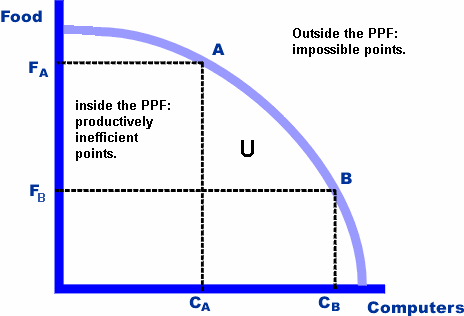
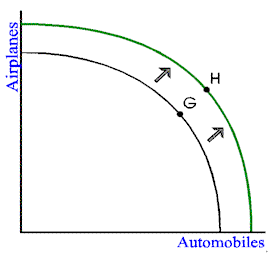
In a stationary economy, as described in the other thread, investment by an entrepreneur can only come as a result of the redistribution of capital from another industry. So, any growth in Industry A comes as a direct result of contraction in Industry B. In a progressing economy, Mises establishes that if Industry A invests due to savings on its own part then the return (the amount of goods produces) will be more than the amount of goods lost elsewhere, where Industry A got its resources (capital, labor, et cetera). It is, at least in some sense, an expansion in the production possibilities curve (a rightwards shift of the PPF); it represents a net increase in wealth.
In regards to the “average rate of profit”, the average rate of profit, according to Marxian economic theory stipulates that rate of profit is equal to surplus value divided by capital invested:
r = surplus value/capital invested
Mises’ criticism is basically a criticism of Marxian theory. He alludes to Das Kapital in his book Human Action:
Many people are utterly unfit to deal with the phenomenon of entrepreneurial profit without indulging in envious resentment. In their eyes the source of profit is exploitation of the wage earners and the consumers, i.e., an unfair reduction in wage rates and a no less unfair increase in the prices of the products. By rights there should not be any profits at all.
Mises says:
From this it becomes evident that it is absurd to speak of a “rate of profit” or an “average rate of profit.” Profit is not related to or dependent on the amount of capital employed by the entrepreneur. Capital does not “beget” profit.
In other words, just because an entrepreneur has invested in an industry it does not automatically equate with profit. Profit is dependant only on the entrepeneur’s ability to meet the consumer’s demand. For example, I can invest by opening a small art & book gallery in a city. I have invested capital and resources, and I can hire somebody to help me run the register. I will pay him very little wages, to “maximize my profit”. Unfortunately, my investment and the poor wages I pay do not automatically equate to any given rate of profit. The case might be that nobody in my city is interested in my books… maybe, they much rather go to the big bookstore in the mall. And so, I make a loss.
The last sentence in the second quote is the most important part: capital does not create profit.
Jonathan, appreciate your interest in choosing my question. I got what you wrote, but I still don’t think it explains how profits (in money terms) are more than losses in a progressing economy.
I interpret Mises’ writings on the topic as an explanation of the productions possibility curve.
There are several factors that can cause a rightwards shift of the curve:
New technology.
Increased wealth (more resources).
In a stationary economy, an increase in the production of food must correspond with a decrease in the production of computers, and so production always follows the production possibilities curve (stays on the curve). In a progressive economy, the curve will shift rightwards:
As you can see, in this case (sorry that the products don’t match; I stole the graphs from the net) an increase in production factors (resources and technology) shifted the curve to the right, and so an increase in the production of airplanes doesn’t necessarily need to cause a proportional decrease in the production of automobiles. The amount of resources available to production have simply increased; this is caused by an increase in wealth/wealth and/or technology.