This forum has revealed to me that I am unequipped to pursue discussions or arguments using what I would call “formal logic” (or, simply, using “logic”). I have been quite humbled by this revelation. Can you recommend an online resource that would be a good starting point for someone brand new to the subject of using logic in debate?
As far as logic goes, I think you need only introductory things. I’d suggest some basic readings about the ancient Greek philosophers. I can’t point you to a source, though.
I guess you could get a good overview here, but it isn’t very systematic or learner friendly: http://en.wikipedia.org/wiki/Portal:Logic
I have been reading an introductory book on logic by Alfred Tarski lately, and I’m liking it a lot better than the crappy textbooks I used in college. You can find it here, if you are interested: http://www.amazon.com/Introduction-Logic-Alfred-Tarski/dp/048628462X/ It’s quite affordable too.
Also, I think I recall reading somewhere that Mises would recommend this book to his students. I’m going to have to pick that one up sometime soon.
Henry Hazlitt used to recommend Stanley Jevons’ Elementary Lessons in Logic, which you can read in its entirety on google books here.
To be honest, I am also looking for recommendations on good sources for learning logic. If anyone has anything to share, please do.
Logic is not learned through reading, but through thinking. Wake up one morning at 4 or 5am and go for a long walk by yourself. Spend as much time as possible doing nothing at all except thinking. Not reading, not talking, not watching anything or listening to anything. Just thinking. The more you do this, the clearer your thoughts will be.
Most importantly, recognize that thoughts are not the same as words. We are able to think on a much finer level than we can put into words, but most people avoid this extra precision out of habit because it makes expressing your thoughts extremely difficult (since if you do it that way you don’t rely on words to form them, but only as memory aids to “peg” thoughts onto). Thinking through all the implications of this fact will give you probably the most valuable tool you could ever have for clear thinking. It also helps immensely in debate, since 99% of misunderstandings and arguments entail, and eventually center around, semantic fuzziness - i.e., the mismatch between the blunt instrument of words and the fine instrument of thoughts.
If you want to invest a long time, study a pure math subject such as real analysis (so-called “advanced calculus”). This gives you an ability to parse subtle logical distinctions, which few people are equipped to do. If you understand that thoughts are not words and you also study math for a while, you will be a logical powerhouse (no need to do messy math like calculation with numbers, or the messy aspects of calculus - you just want to be a “concept junkie” always looking for new logical animals out there to challenge yourself with, and creating your own).
For debating itself, read up on logical fallacies so that you can identify them in your own writing and point them out in other people’s writing. Here’s the most comprehensive list I could find.
http://freethoughtpedia.com/wiki/Logical_Fallacies_by_Todangst
If any strike you as odd or uncanny in any way, spend a long time thinking about them - especially the fallacies that involve definitions, such as the “no true Scotsman” fallacy. And always remember: everything is easy once you grasp it.
Great advice and a great list! I’ll just throw in here that if anyone wants advice on how to think clearly, do take a look at Hazlitt’s Thinking as a Science, which is surprisingly still good after all these years (especially his chapter on concentration).
The surest way to master formal logic is to work through textbooks. For deductive logic try Introduction to Logic by Harry Gensler, and for inductive logic you can do no better than An Introduction to Probability and Inductive Logic by Ian Hacking.
I recommend, as two very clear introductory texts, “An Introduction to Logic and Scientific Method” by Morris Cohen and Ernest Nagel, and “The Art of Reasoning” by David Kelly.
From Amazon, a description of the first one:
Morris Cohen and Ernest Nagel’s book is very good. I have read part of it. I haven’t finished reading it yet as I recieved it with other books in line to read first but began to read a bit to get a taste for it. It is very clearly written, but as with any logical book contemplation is key to fully understand. So read. Sit back. Contemplate. Mull over the concepts while doing some other activity or simply while sitting in the quiet. I find it seems challenging at first and I wondered where this is going at times, in other words, how am I going to remember this or that, but then all the books I’ve read so far on this topic tiddy up the concepts and pull it all together - generalizes - in a way that gets me going, “Oh, I see now!”.
I have read some of Aristotle’s books and Aquinas commentaries on Aristotle, ie. “On Human Nature”, “On Interpretation”, and “Prior Anayltics”. “Introduction to Logic” by Immanuel Kant was a brief book, comparatively, but was very clear and has superb explanatory power. The brevity was good as I learned a lot in a short period of time and the explanations had great depth so Kant really got directly to the point each and every time. Here’s a good article by Rothbard on logic. Jeffery Tucker wrote an excellent Mises Daily article here. And Mark Covelli’s Mises Daily article was very insightful especially since it contrasts Rationalism with Empiricalism.
Well, I just picked up Cohen’s book from the Amazon marketplace for nine bucks. Amazon protip: scour the marketplace for good deals.
Firstly, sincere congratulations for the honesty and courage to write such a post.
As a lad, I read this: http://www.amazon.com/Clear-Thinking-Rudolf-Franz-Flesch/dp/B00005VFWY. Looks like amazon will give you a copy for 5 bucks. It has served me well all my life, just that one reading.
I looked at the link posted above, http://freethoughtpedia.com/wiki/Logical_Fallacies_by_Todangst, and it’s very good for clearing away the underbrush, in other words, to realize that the kind of stuff you will hear from politicians and TV personalities and such is garbage, and why.
Good old high school geometry is a great training ground for logic. it teaches you that every statement you make has to be backed up How to put together a logical argument. Great stuff.
But then there is the subtler stuff. Like this famous one:
This dog is yours.
This dog is a father.
Therefor this dog is your father. And if you beat him, you beat your father. [The catch is the word “your” is being used two different ways].
Aristotle got things started and did 90% of the work, but the subtleties and problems caused by using a language in which words have many meanings were only solved by the mathematicians of the 19th century, who replaced words with symbols, and got everything cleared up.
One of the mathematicians who worked on logic is the author of Alice in Wonderland, who wrote a charming book on logic. Here is a typical excercise of his:
What can you conclude using all these statements together?
(a) No ducks waltz.
(b) No officers ever decline to waltz.
(c) All my poultry are ducks.
[I think the answer is: none of my poultry are officers.]
You can find his stuff online for free.
OK now comes crunch time. People want knowledge, but are discouraged by the effort needed to get it . And indeed concentration is needed for what follows:
http://www.math.hawaii.edu/~hile/math100/
Go there and do all the logic stuff.
Best of luck learning what Lew Rockwell claims is being hidden from you on purpose, how to think clearly.
Nice example of semantic-based blur.
My personal favorite is the word “the” because it allows you to subtly place multiple declarative statements within one sentence, or even to make a statement when it looks like you’re asking a question. For instance:
“What is the correct answer to this question?”
Until you realize this is actually two sentences in one (“There is a correct answer to this question” + “What is it?”), it’s very difficult to answer. Once you realize this, you simply reject the first sentence as false and the second as incoherent.
Along the same lines is “Do you still beat your wife?” (“You used to beat your wife.” + “Do you still?”)
One last example of the double-statement use of “the”:
These are pretty obvious examples, but in real life there are tons of the’s and still’s and other syntactic anomalies. The moral is that words are tricky.
–
Another one, applicable to Austrians vs. mainstream economists, is what you might call the scientistic fallacy:
Thinking scientific reasoning trumps logical reasoning. In other words, not understanding that empirical evidence provides a lower, not higher, degree of proof than conclusions derived from pure logical reasoning. Non-scientists make this mistake all the time, and even some scientists do.
This general fallacy of applying facts proven to one standard of proof in a situation that demands a higher standard of proof (which the previously “proven” fact may not meet) is extremely common and usually goes unnoticed by all parties.
Thanks, everyone, for the replies. I suspected that my search for reading materials (and ideas) would be more effective if I started here with a post. These are great ideas and suggestions. I’ve got plenty to work with now.
AJ: I will think about what you had to say about thinking!
Smiling Dave: My post required honesty but not courage! When my shortcomings are exposed, I call that progress.
AJ, that was a very informative post. TY
chloe - Thanks for posting this.
I read a lot of what is posted here but don’t participate for much the same reasons.
A village idiot loves company. [8-|]
Great resources in this topic to add to the list.
For a ‘part-time thing’ this is becoming a full-time job! [<:o)]
Agreed. I still participate here, but I realized that to make credible arguments, logic would be needed. Now, I am taking on AE, anarcho-capitalism, and logic. When I first signed on to the forum six weeks ago, it was just AE. This is an intellectual pursuit, and I enjoy it.
Incorrect. There may still be officers within your poultry provided that they’ve never been asked to waltz (hence never given a chance to decline it).
Regarding OPs question… I second AJs suggestions and along the same lines I’d add that learning at least one foreign language really good would help a lot. No two languages have the same logical traps, so you can always use your thinking in one language as a rope to get you out of the trap made by the other. English is not my native language, and I always find it funny when people ask me what language I dream in, because I actually don’t know.
Finally, the best way to learn anything is to just throw yourself in its midst. But to do this properly you need to lose your ego and also use the other’s (more knowledgable) egos to your advantage. A good logician with a strong ego will be more than pleased to teach you about your errors for free. Plenty of those around on any forum including this one. So lose an ego and pick a fight…
Z.
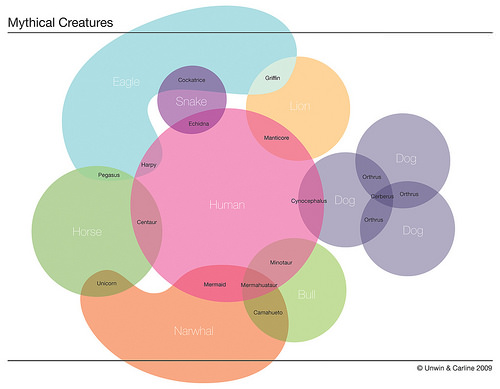
I can’t believe I forgot to mention languages. Studying Japanese and living in Japan has helped me a lot. As you say, some logical traps that are hidden in English are laid bare in other languages, and vice versa. It also teaches you that words have a broad range of meaning, because you’re constantly bombarded with that fact when you try to translate between languages. The Venn diagram of one set of meanings in English is almost always totally different in Japanese. It’s not just that the diagram would have different labels, but that the whole shape and structure of the diagram and where meanings overlap would be different.
Also, I can’t tell what language I’ve just spoken sometimes if I am preoccupied, similar to not realizing which language you dream in. It’s as if you have the thoughts and they are just automatically converted to words that you automatically say, but afterward all you remember is the thought.
Incorrect. There may still be officers within your poultry provided that they’ve never been asked to waltz (hence never given a chance to decline it).
I must say I was amused and impressed**. However:**
If I have an officer in my poultry, she is a duck, by c]. If I walk over and ask her to waltz, she will not decline by b], and therefor begin to waltz, and then immediately enter the Twilight Zone, because no ducks waltz, by a]. If we assume this to be impossible, then I can’t have an officer in my poultry.
It might be impossible for you to ask her to waltz [;)]
So true. Take the english word “argue” as it is used in the US, for example. That same word is actively used to simultaneously cover two very different activities(1. discuss, debate. 2. quarrel, fight) which are referenced by two different words in most other languages. “He argues a lot” or “He likes to argue” immediately assign combativeness to even the most mild-mannered discussion junkie, as if the two must go together. Linguistic “bugs” like these uncover a lot about a culture. In the US, this “bug” uncovers an implicit understanding that arguing must also be a combative, competitive, aggressive, and ego-laden activity – and expressing one’s love for arguing is tantamount to an overt expression of aggression.
Z.