- The expenses incurred from the production of the good in question affects the supply of that good. As a determinant of supply, the costs of producing a good affects the supply of that good and affects the price of the good in that manner. Explains Shostak:
How prices are determined
Contrary to the mainstream view, prices are not just given; they are set by somebody. This somebody is a producer. Whenever a producer sets a price for his product, it is in his interest to secure a price where the quantity that is produced can be sold at a profit. In setting this price, the producer/entrepreneur will have to consider how much money consumers are likely to spend on the product, the prices of various competitive products, and the cost of production.
Producers set the price, but consumers, by buying or abstaining from buying, are the final decision-makers as to whether the price set will lead to a profit. Producers in this regard are at the total mercy of consumers. If, at a set price, a producer cannot make a positive return on his investment because not enough people are willing to buy his product, the producer will be forced to lower the price to boost turnover. Obviously, by adjusting the price of the good, the entrepreneur must also adjust his costs in order to make a profit.
Consequently, a producer will secure a profit when, at the set price of a good, consumer buying will generate revenue that will exceed the cost plus interest. Profit is an indication that both producers and consumers have improved their well-being.
In short, by investing a given amount of money, producers have secured a greater amount of money. This, in turn, enables them to secure a greater amount of goods and services, which in turn promotes their lives and well-being. Likewise, consumers, by exchanging their money for goods that are on their highest-priority lists, have raised their living standards.
In actual fact, price-setting is never mechanistic and automatic. It is up to the producer/entrepreneur to assess whether it is a good or a bad idea to raise prices; after all, what matters for him is making a profit. When a good makes a profit at a particular price, then it is a signal to entrepreneurs that consumers are willing to support the product at the set price. Prices, therefore, are an important factor in establishing how producers/entrepreneurs employ their resources.
Observe, then, that what determines the amount of goods supplied is not some hypothetical demand schedule, but a producer’s appraisal as to whether, at a given place and a given time, consumers will approve of the goods supplied.
Also, no producer is engaged in hypothetical ideas regarding the amount he will supply at varying prices. He has to be as accurate as possible in setting the right price that will enable him to sell his supply at a profit.
“2) why can’t insurance companies charge a higher premium for that [sick, as a preexisting condition] person?”
But… but … immoral capitalism …
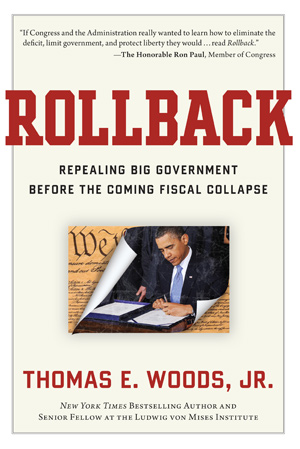
A lot of problems regarding coverage are related to government interventions that reduce the supply of medical care and increase demand for it. As the prices for certain goods go up, insurance companies are forced to reduce prices somehow and this often manifests in reducing coverage for certain ailments. Ironically, the provision of the PPACA that provides a penalty (Not enough Americans have health care? We’ll make it illegal not to have it! Fixed.) for refusing to buy a government approved healthcare plan is low enough so that it pays to not be covered, and pay the penalty, and then be covered once one becomes ill- imagine the effect this will have on premiums and prices. Tom Woods goes into great detail on Obamacare and government intervention in the health insurance market in this book, if you are still curious: