Like the right to health care? Why is that any different than any other government “right”?
’ “unequal treaties” ?!! explain this statement cain.’
The Unequal Treaties is the name given to diplomatic exchanges specifically between Western powers and the Asia region. It usually involves gunboat diplomacy and strong arm tactics in which the Western powers have an overarching implicit control over the ‘lesser nation.’ Two famous examples of the Unequal Treaties are 19th century China and Japan. Now you asked why Japan didn’t just accept unconditional surrender and be done with it. To answer that question, I point to these Unequal treaties in which Western powers which includes the US but is not specific to it. The US opened Japan and gained a sphere of influence in China through power plays leaving the Asian nations weak and humiliated. That is why the 19th century is also know as the century of humiliation in China. Japan was somewhat different since they weren’t completely taken over like China but there was always a fear of that which is why they decided to work with the Western powers to become an industrial nation in order to not be taken over by said Western powers. This can be seen by the rapid westernization experienced during the Meiji regime in which Japan built a public school education, started male sufferage and created its own constitution. Now there would be discussions/debates about whether Japan was heading down the right course with westernization because some felt they were losing their heritage but that is a different topic. So you asked why didn’t they just surrender unconditionally, because the western powers had a history of screwing them over in diplomatic relations with things such as the unequal treaties. Thus endth the lesson.
‘tell me an example of a recent “good war” cain’
I can think of no recent ‘good war.’ I would hardly think the revolution was a ‘good’ war. People like to pound there chest over the ideals of the revolution but those ideals weren’t upheld during that revolution. Loyalists were hanged without cause, Continental soldiers stole supplies from American citizens. The British weren’t handing out cupcakes but it can hardly be called good if one side is only committing evil half the time rather then all the time.
‘and clarify your bizarre statement that the Americans killed civilians who surrendered. From my history lesson, the Americans were benevolent occupiers.’
And I’m the naive one? You think soldiers are ‘benevolent’? If you actually read what I wrote you would see it is in question format. It is not a statement. I was asking you what you meant by ‘saving civilians’. Please go read it again and answer my question if you are so inclined.
‘Lastly, how would an handwringing pacifist like yourself conduct the war to defeat powers like germany and japan in the absence of strategic bombing?’
Being pro-peace or a dove does not necessarily make you a pacifist. I support coercion against criminals [ not innocent people ] so I can hardly be called a pacifist. I wouldn’t of gotten involved in WWII. You seem to think that the US’ borders extend beyond itself so I wonder how you reconcile things like national sovereignty or self-determination with your hegemonic view of global security. Though as we have seen through this topic, consistent positions seem to frighten you. You seek ‘fluidity’ in order to get what you wish and deny others what they deserve. As if the rules of logic apply to all but you. It’s a big sham and I don’t know how you deluded yourself into thinking you support freedom through domination.
@Andrew Cain,
When you unconditionally surrender there are no negotiations, you either accept or decline. So the argument for “unequal treaties” is an oxymoron when you are confronted with a demand for unconditional surrender. If the Japanese hadn’t started the war there would have been no need for unconditional surrender. The Japanese/Tojo, Hitler and Stalin thought that they had enough power to overpower and demand submission from most of the world as well as isolate the US and/or create a isolationist sentiment of no interference among the US public. They failed and had to pay the price for their power grab. Dude its called “Realpolitik” and “Total War” (Carl Von Clausewitz in “On War,” see below.)
The treaties you further refer to were also treaties under the gun, it was sign this or else. Any treaty is unequal when power is equal. The more unequal the power ration the more unequal the treaty. For my to discuss “unequal treaties” it as like saying. “Life is unfair”, grow up dude life is unfair and power is power.
You and most of your compatriots shirk the basic argument here. You say you would not have gone to war to defend friends and neighbors nor to preemptively stop a future attack. It’s a position many Americans held up until Pearl Harbor not so many after the unprovoked attack.
What we are discussing. How to stop the ONGOING war. Not what could happend if.. or what might happen in the future… but what to do then. What methods to use? If you are unable and unwilling to discuss this butt out!
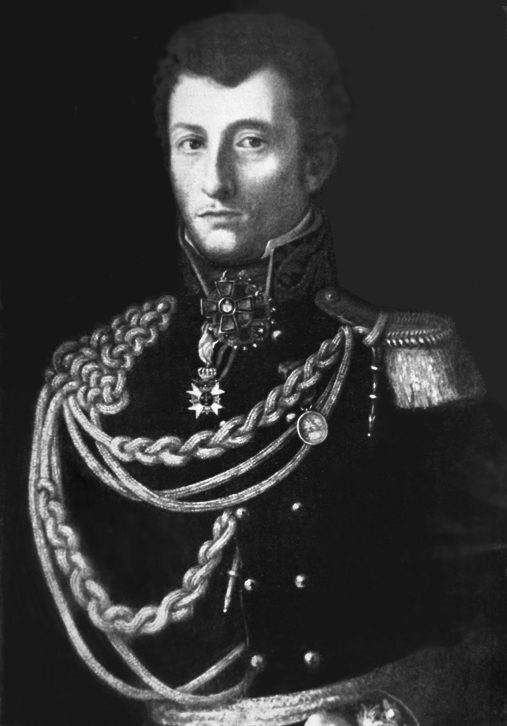
Carl von Clausewitz
born June 1, 1780, Burg, near Magdeburg, Prussia — died Nov. 16, 1831, Breslau, Silesia) Prussian general and author. Born to a poor middle-class professional family, he joined the Prussian army at age 12 and entered the War College in Berlin in 1801. After serving with distinction in the Napoleonic Wars, he became a general and was appointed director of the War College (1818). His major work on strategy, On War (1832 – 37), analyzed the workings of military genius by isolating the factors that decide success in war. Rather than producing a rigid system of strategy, he emphasized the necessity of a critical approach to strategic problems. He asserted that war is a tool for achieving political aims rather than an end in itself (“merely the continuation of policy by other means”) and argued that defensive warfare is both militarily and politically the stronger position. He also advocated the concept of total war. Published posthumously, On War had a profound influence on modern military strategy.
Principal ideas
A young Carl von Clausewitz
Some of the key ideas discussed in On War include:
- the dialectical approach to military analysis
- the methods of “critical analysis”
- the nature of the balance-of-power mechanism
- the relationship between political objectives and military objectives in war
- the asymmetrical relationship between attack and defense
- the nature of “military genius” (involving matters of personality and character, beyond intellect)
- the “fascinating trinity” (wunderliche Dreifaltigkeit) of war
- philosophical distinctions between “absolute” or “ideal war,” and “real war”
- in “real war,” the distinctive poles of a) limited war and b) war to “render the enemy helpless”
- “war” belongs fundamentally to the social realm—rather than to the realms of art or science
- “strategy” belongs primarily to the realm of art
- “tactics” belongs primarily to the realm of science
- the importance of “moral forces” (more than simply “morale”) as opposed to quantifiable physical elements
- the “military virtues” of professional armies (which do not necessarily trump the rather different virtues of other kinds of fighting forces)
- conversely, the very real effects of a superiority in numbers and “mass”
- the essential unpredictability of war
- the “fog” of war[5]
- “friction”
- strategic and operational “centers of gravity”[6]
- the “culminating point of the offensive”
- the “culminating point of victory”
If the Japanese hadn’t started the war there would have been no need for unconditional surrender.
This does not follow. The condition holding back the Japanese from surrendering was the fate of the House of the Emperor. After surrender, the US never even pursued the emperor anyhow. Also, there is way more to cause of the conflict than just Pearl Harbor. You need to look back almost 20 years to the Kellogg-Briand Pact.
Like the right to health care? Why is that any different than any other government “right”?–JonBostwick
i agree with you that these positive freedoms – health care, overpaid jobs, lengthy vacations, early retirement, et al — are anathema to freedom.
postive rights are simply tools despots used to increase power over the citizenry.
Note that the nations that are the most free, prosperous, and stable are those that allow the individual to retain the most rights and responsibilities, including health care.
One of the negative rights I advocate is a balanced budget amendment to the COnstitution without any strings attached so that governments and the citizenry must pay up front for wars and social programs. This amendment alone would significantly reduce government spending, corruption, conflict, and waste.
Moreover, I read a nice rebut on a leftwing thread from a conservative who was arguing with a liberal regarding postive rights. for example, if a citizen accepts something for free, health care for example, isnt that individual a slave to the benefactor (government)?
those automatons who favor more government are essentially bartering their freedoms for a false sense of security?
This does not follow. The condition holding back the Japanese from surrendering was the fate of the House of the Emperor. After surrender, the US never even pursued the emperor anyhow. Also, there is way more to cause of the conflict than just Pearl Harbor. You need to look back almost 20 years to the Kellogg-Briand Pact.–olvetto
It is disturbing how the anarchists come to the defense of the most heinous and brutal of statist regimes in order to lambast one of mankind’s oldest and most influential free society.
Moreover, if reality doesnt jive with their perception, they disregard 99% of the facts (racist and militaristic Imperial Japan was unabashedly expansionist) and focus on 1% minutia (Kellogg-Briand Pact)
It is easy to see why there are absolutely no anarchic societies on the planet. They naively believe that isolationism and market forces will protect them from prediation when history has shown otherwise. MOreover, they judge despotic states to be harmless if diplomacy is conducted using the “Golden Rule” .
Einstein judged them best:
“insanity is doing the same thing over and over again and expecting different results”
I can think of no recent ‘good war.’ --cain
of course, we already knew that was your position.
Hence, your position regarding the bombs on nagasaki and hiroshima is not based on the facts at hand, but your rigid ideological chains.
No war, no tactic, no outcome is supported by the anarchist. He simply hates war, government, et al.
It is like arguing the divinity of mohammad with islamic extremists.
Rigid ideologue extremists.
I would urge Rettoper and anyone else interested in the causes of World War II to read this piece by G. Edward Griffin:
Days of Infamy: The Future Is Calling (Part Three)
If you would like to get straight to Pearl Harbor, skip ahead to page 7 and the heading “World War II.”
It is a well-researched, factual, footnoted analysis that demonstrates how the Roosevelt administration successfully aggravated Japan into the attack, facilited the attack despite comprehensive intelligence, and then insulated the victims from the knowledge that would have saved their lives.
Yes, Japan was racist, militaristic, and unabashedly expansionist. But so was the United States. Our leaders just did (and still do) a better job of hiding their true agenda from view.
‘When you unconditionally surrender there are no negotiations, you either accept or decline.’
Dispensing the edict is obviously a negotiation and it is not as if American diplomats walked in on their Japanese counter parts said ‘Unconditional Surrender, yes or no?’ then walked out.
‘So the argument for “unequal treaties” is an oxymoron when you are confronted with a demand for unconditional surrender.’
My argument was showing cause as to why Japan would not first agree to unconditional surrender which was due to the fact that western powers for the last century and a half had been using strong arm diplomacy to subdue the nations of Asia. It would be making explicit what is implicitly slavery.
'f the Japanese hadn’t started the war there would have been no need for unconditional surrender.’
Like Rettoper, you disregard the cause of the war and merely look at the effect. Either that or you seem to be implicitly stating that the Japanese people are expansionist by nature.
‘The Japanese/Tojo, Hitler and Stalin thought that they had enough power to overpower and demand submission from most of the world as well as isolate the US and/or create a isolationist sentiment of no interference among the US public.’
So the America First movement were really Japanese sympathizers? Or they were being sustained by Japanese interests?
‘The treaties you further refer to were also treaties under the gun, it was sign this or else. Any treaty is unequal when power is equal. The more unequal the power ration the more unequal the treaty. For my to discuss “unequal treaties” it as like saying. “Life is unfair”, grow up dude life is unfair and power is power’
How can I argue with such a blithely attitude towards the unjustices of the world? You seem to speak as if rights are granted by mere power alone and there is no rule of law in war or social interaction between individuals.
‘You and most of your compatriots shirk the basic argument here. You say you would not have gone to war to defend friends and neighbors nor to preemptively stop a future attack. It’s a position many Americans held up until Pearl Harbor not so many after the unprovoked attack.’
Who said I wouldn’t fight for a friend? I stated I am not a pacifist yet you and others continue to perceive me as one because I dislike war. I find that all sane men should dislike war and do anything to avoid it. Only the moronic and mad seek it out for glory, honor or power. I ask for strict constructionism in establishing a threat. Fear baiting about possible futures is not sufficient for preemption.
‘What we are discussing. How to stop the ONGOING war. Not what could happend if.. or what might happen in the future… but what to do then. What methods to use? If you are unable and unwilling to discuss this butt out!’
Two points. One, its silly for you to make this statement when you are discussing how Tojo and Stalin wanted to conquer the world and were one step away and therefore got what they deserved. Poor form. Two, WWII is not an ongoing war so I don’t know what you even mean by this statement. Perhaps you should ‘butt out’ and reflect on your statements before you continue.
'i agree with you that these positive freedoms – health care, overpaid jobs, lengthy vacations, early retirement, et al — are anathema to freedom.
postive rights are simply tools despots used to increase power over the citizenry. ’
Isn’t living in a democratic country a ‘positive right’?
'Hence, your position regarding the bombs on nagasaki and hiroshima is not based on the facts at hand, but your rigid ideological chains. ’
I hate war therefore my opinion is ideologically rigid? Are only the fluid people who welcome war worthy of spreading ideas? Those who welcome contradiction?
You are obviously not seeing the facts because you refuse to retort to my whole argument. Stop being a petulant child or I will just throw you out of here.
@Andrew Cain
I’m beginning to wonder if you know anything about multilateral negotiations and international treaties?
The surrender of Japan was not negotiable for US diplomats. It was not a bilateral treaty. The US, Roosevelt, had signed a multi lateral treaty with Stalin and Churchill. The fate of the Axis powers was decided in Potsdam, hence the Potsdam Declaration (Ultimatum) i.e. sign whatever we put on the table or else we annihilate you and your people. So whether or not Japan/Tojo would sign because of the issue of the emperor is a non issue, it was never on the table. The Allies like in Hitler Germany was single handedly going to decide the fate of the Japanese High Command and the Emperor, it was up to the Allies to do as they saw fit i.e. they could have executed them all on sight. The Allies choose to do the sham Nuremberg trials and because of Soviet expansion plans decided they needed Japan as an ally and left the Emperor and all Japanese War Criminals alone while going after the Nazis.
America First movement I know very little about but I know a lot about the European movement to make Europe a nuclear weapon free zone. It was riddled with communist infiltrators and activists working for the better of the Soviet Communist empire. Some were true believers others were as Lenin put just “Useful idiots”. I assume that the America First movement had some true patriots but very probably was as infested by German and Japaneses agents and “Useful Idiots” in leading positions. Pacifist and Isolationist have always been used as tools by totalitarians regimes to undermine non-totalitarian and non-authoritarian regimes. By this you might infer that I assume most anarchists to be “Useful Idiots”, you are quite correct. They as pacifist serve totalitarian and expansionist regimes whilst believing hey uphold superior moral stances.
You are totally unable to get my point. How do you stop an ongoing war? We where discussing the situation in 1945 i.e. how to get Japan to unconditionally surrender? No negotiations were possible because of multilateral treaties. So how would you have stopped the war in 1945?
In political jargon, the term useful idiot was used to describe Sovietsympathizersin Western countriesand the attitude of the Sovietgovernment towards them. The implication was that though the person in question naïvely thought themselves an ally of the Soviets or other Communists, they were actually held in contempt by them, and were being cynically used.
The term is now used more broadly to describe someone who is perceived to be manipulated by a political movement, terrorist group, hostile government, or business, whether or not the group is Communist in nature.
In the United States, the term is used as a pejorativeto describe a naive person manipulated to produce propaganda for a malign cause.
Since the September 11, 2001 attacks, the term “useful idiot” has also been used by some commentators to describe individuals they believe to support Islamism and terrorism, or favor an approach based on appeasement. For example, Anthony Browne wrote in the United Kingdom newspaper, The Times:[4]
| “ | Elements within the British establishment were notoriously sympathetic to Hitler. Today the Islamists enjoy similar support. In the 1930s it was Edward VIII, aristocrats and the Daily Mail; this time it is left-wing activists, The Guardian and sections of the BBC. They may not want a global theocracy, but they are like the West’s apologists for the Soviet Union — useful idiots. | ” |
|---|
Similarly, Bruce Thornton, a professor of Classics at American University of Cal State Fresno wrote:[5]
| “ | Lenin called them “useful idiots,” those people living in liberal democracies who by giving moral and material support to a totalitarian ideology in effect were braiding the rope that would hang them. Why people who enjoyed freedom and prosperity worked passionately to destroy both is a fascinating question, one still with us today. Now the useful idiots can be found in the chorus of appeasement, reflexive anti-Americanism, and sentimental idealism trying to inhibit the necessary responses to another freedom-hating ideology, radical Islam. |
|---|
So whether or not Japan/Tojo would sign because of the issue of the emperor is a non issue, it was never on the table.
Yes, we know that the US demanded unconditional surrender. We also know that they intercepted messages between Japan and Russia stating their issue with the House of the Emperor. So from the fact that they didn’t offer the one condition holding back Japan from surrender (which they in the end never pursued) we can conclude that the US didn’t want surrender until after they bombed the hell out of 'dem Japs with their new toy.
Ever heard the phrase “like talking to a brick wall”? This thread is the epitome of it.
By this you might infer that I assume most anarchists to be “Useful Idiots”, you are quite correct. They as pacifist serve totalitarian and expansionist regimes whilst believing hey uphold superior moral stances.
Libertarianism is not pacifism. You don’t seem to know what you are talking about, yet continues to argue this point. Stop being obstinant.
@E. R. Olovetto
No, the US did not demand unconditional surrender. The Allies demanded unconditional surrender as part of a multi lateral treaty obligation. If the US after intercepting transmission would have wanted to change the terms they would have had to call a new conference as in Potsdam to change the conditions in a new multilateral treaty. There were very few meetings during WWII between the leaders of the Allies and I think it highly unlikely that Stalin and Churchill would have agreed to anything else but full submission. In fact Stalin and Churchill wanted to execute all the Axis leaders immediately, it was the US that said the they had to be tried in a court and according to Rule of Law. So why on earth should the US make concessions to Stalin and Churchill to save the Emperor when the US was all about dismantling the British Empire/colonialism and stopping Stalin in his tracks?
I didn’t say that anarchists are pacifists per se. They are isolationists. I wrote that while keeping the high moral ground the Isolationist and pacifists inadvertently help totalitarian and authoritarian regimes in their causes. Charles Lindbergh one of the spokespersons for America First is a prime example. He was a proto-fascist and believed in the supremacy of the white race. He and Henry Ford was awarded a medal of honor from Hitler presented by Göring. He refused to give it back after the Kristallnacht.
He said this about the Brits and the Jews, does it sound familiar? I’ve read similar statements and arguments these pages
“the potentially gigantic power of America, guided by uninformed and impractical idealism, might crusade into Europe to destroy Hitler without realizing that Hitler’s destruction would lay Europe open to the rape, loot and barbarism of Soviet Russia’s forces, causing possibly the fatal wounding of western civilization.”[64]:
“Instead of agitating for war, the Jewish groups in this country should be opposing it in every possible way for they will be among the first to feel its consequences. Tolerance is a virtue that depends upon peace and strength. History shows that it cannot survive war and devastation.”[65]
In a speech at an America First rally in Des Moines on September 11, 1941, “Who Are the War Agitators?” Lindbergh claimed the three groups, “pressing this country toward war [are] the British, the Jewish and the Roosevelt Administration” and said of Jewish groups,
In the speech, he warned of the Jewish People’s "large ownership and influence in our motion pictures, our press, our radio and our government", and went on to say of Germany’s antisemitism, “No person with a sense of the dignity of mankind can condone the persecution of the Jewish race in Germany.” Lindbergh declared,
“I am not attacking either the Jewish or the British people. Both races, I admire. But I am saying that the leaders of both the British and the Jewish races, for reasons which are as understandable from their viewpoint as they are inadvisable from ours, for reasons which are not American, wish to involve us in the war. We cannot blame them for looking out for what they believe to be their own interests, but we also must look out for ours. We cannot allow the natural passions and prejudices of other peoples to lead our country to destruction.”[66]
I hate war therefore my opinion is ideologically rigid? Are only the fluid people who welcome war worthy of spreading ideas? Those who welcome contradiction?
You are obviously not seeing the facts because you refuse to retort to my whole argument. Stop being a petulant child or I will just throw you out of here.–cain
Your programmed to oppose war in all instances irrespective of its utility in saving lives, promoting long term peace, increasing stability, and promoting freedom. FOr example, I challenged you to cite a war that resulted in a net increase in peace and freedom and you could not.
if there was ever an example of intellectual rigidity and programming, I have not seen it (unless it is religious extremists)
My assertion was that the successful and brutal execution of war in destroying the axis powers led to the most peaceful, prosperous, stable, and free europe in history. Moreover, japan was transformed from an violent and expansionist empire to a prosperous, peaceful engine of consumer goods.
thanks to the America’s application of force.
moreover, I challenge you to cite the quote where I claimed to “welcome war”. I am intellectually flexible enough to venture both paths depending on the utility of either to achieve lasting peace, prosperity, freedom, and stability. For example, I have constantly cited these tenets as the overarching goal of mankind.
Lastly, your emotional invective threatening to “throw you out of here” and calling me a “petulant child” is as amusing as it is self-indicting.
but this is noteworthy, since it proves that a peaceful anarchist society is fantasy, even among fellow anarchists. Mankind by his very nature is prone to conflict irrespective of the machinations of the market. Cain in a moment of excitable weakness proves this with his emotional threat to “throw you out of here” Highly contradictory and amusing to be threatened with censorship by an anarchist ?!
thanks for the humor, though unintended.
Stop double/triple/sextuple posting. I’m boycotting this thread.
olovetto and cain,
Anarchists threatening boycotts, and censorship?!
what is the world coming to?
Why do you think it’s a contradiction for an anarchist to want censorship in a private entity(not implying they wanting to censor anything).