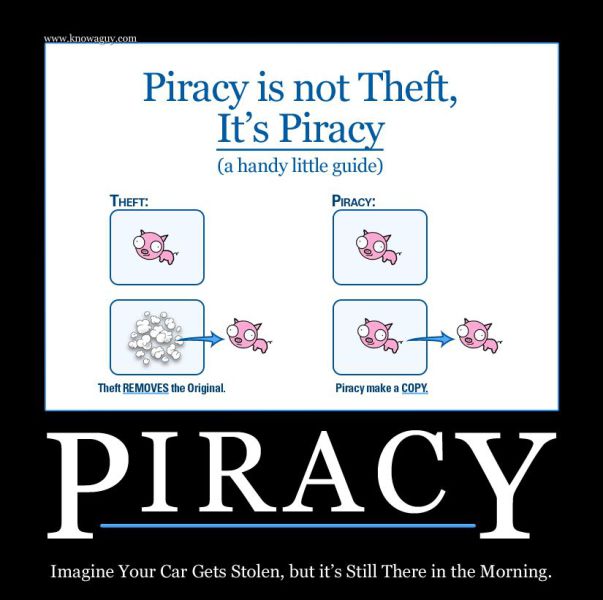
As you might guess, this is covered in IP and contract literature, the former of which you can find here:
From The Ultimate Beginner meta-thread:
But to answer your questions,
I realize some people allege that defining of terms is useless and unnecessary, but I would say you need to define “digital property”.
If you’re asking “can I not make a contract to sell information?”, the answer is “of course you can”. But since “information” is not “property” that you can own and have title to, you’ll have to structure the contract so that a title transfer of some actual property takes place. It could work the same way performance contracts would work. Rothbard goes into this in The Ethics of Liberty here:
“Property Rights and the Theory of Contracts”
Suppose that a celebrated movie actor agrees to appear at a certain theater at a certain date. For whatever reason, he fails to appear. Should he be forced to appear at that or at some future date? Certainly not, for that would be compulsory slavery. Should he be forced, at least, to recompense the theater owners for the publicity and other expenses incurred by the theater owners in anticipation of his appearance? No again, for his agreement was a mere promise concerning his inalienable will, which he has the right to change at any time. […]
For utilitarians shocked at the consequences of this doctrine, it should be noted that many, if not all, of the problems could be easily surmounted in the libertarian society by the promisee’s requiring a performance bond of the promissor in the original agreement. In short, if the theater owners wished to avoid the risk of nonappearance, they could refuse to sign the agreement unless the actor agreed to put up a performance bond in case of nonappearance. In that case, the actor, in the course of agreeing to his future appearance, agrees also to transfer a certain sum of money to the theater owners in case he fails to appear.
Since money, of course, is alienable, and since such a contract would meet our title-transfer criterion, this would be a perfectly valid and enforceable contract. For what the actor would be saying is: “If I do not appear at Theater X at such and such a date, I hereby transfer as of the date the following sum _____, to the theater owners.” Failure to meet the performance bond will then be an implicit theft of the property of the owners. If, then, the theater owners fail to require a performance bond as part of the agreement, then they must suffer the consequences.
Indeed, in an important article, A.W.B. Simpson has pointed out that performance bonds were the rule during the Middle Ages and in the early modern period, not only for personal services but for all contracts, including sales of land and money debts.
Threads where this is discussed:
Inalienability of the self
What would Rothbard say about non-compete language in an employee contract?
No. Suggesting that you have to leave a computer visible is essentially the same as suggesting you have to leave your window shades up. What is the logic of that?
As for cracking into your computer system, this is obvious property violation, as they are gaining access to your property without your permission. (Sure they’re after your digital information, which is not property…but they have to access your physical property (directly or indirectly) to get to it.)
It would depend on how they gain access to the physical material. Obviously hitting you over the head from behind and running off with your briefcase is not a legitimate means of gaining such access.
Depends on what you mean by “manipulate”. If you’re saying gaining unauthorized access to a computer system and making changes to the information stored there, obviously no, as you have no right to be accessing those computer systems. If you’re saying the computer system owner manipulating his own data, sure, he could do that…but then depending on the circumstances, you get into fraud territory.