If you want to hold physical silver consider buying pre 1965 junk silver. If your not a collector and you are interested in the silver only in it’s weighted value then that would be a cheap way to get some silver.
The problem with silver however is as as your investment grows, you will need find a place where you can store potentially buckets full of silver coins. These tend to get ridiculously heavy and take up alot of space. On the flip side it’s all far more divisible then gold.
The CPI does not actually measure inflation and it is inherently flawed. Commodity and food prices are rising across the globe at extremely rapid rates. That being said, a 0% FFR is as expansionary as it gets. The FED only directly controls the monetary base; it does not control the monetary aggregates.
Never mind the fact that the FED is also buying MBS’s and targeting long-term interest rates (unprecedented). If the economy has any kind of recovery, and if the demand for money falls, the monetary aggregates will expand dramatically, and we will see extreme general price inflation. Furthermore, the FED cannot drain the system of excess reserves because it would collapse the demand for securities, which would elevate interest rates, and crush the “recovery.” The FED’s expansionary monetary policy has inflated a bubble in the bonds market. This is why they are paying interest on reserves (their new tool of monetary policy), but the long-term consequences of this new tool are unknown.
The chances of hyperinflation are highly unlikely as long as the dollar remains the major world reserve currency (vehicle status). But, if the dollar loses this extremely privileged status, we should expect the value of the dollar to collapse. There is this whole international dimension that is often overlooked.
Esuric, I don’t really know how the fed operates. I kind of know what open market operations are but that’s about the extent. What would you suggest i read/watch?
I commute and live about 10 minutes off of campus. My school isn’t known for my major (financial economics) but I like the program. I’m actually going to Loyola to get my Masters of Science in Finance next year. Are you from the area?
Nope, currently in the Mo-Co area, going back to college to pick up where I leftoff last time (just getting a small A.A.S under my belt for any possible internships, will probably end up choosing my major as early as next semester, though).
looks like the discussion is dead, but i types this up earlier this week so here it is. it was written quickly so forgive any errors you find.
The CPI does not actually measure inflation and it is inherently flawed. Commodity and food prices are rising across the globe at extremely rapid rates.
I agree that the CPI is a flawed metric, but I don’t know if I would say it was more flawed than just cherry picking prices from one or two goods as the basis for one’s argument for inflation. after all, how would you know that prices weren’t rising for those one or two goods because of industry specific cost factors? This exactly why economists use multiple measures of inflation.
anyways, back to the data at hand. I think I see what you are trying to say. you are right that wholesale food prices are rising (while consumer prices have increased only 1% over what they were last year) and so are the prices of some commodities. so i am thinking you are arguing that since prices to producers are rising, that implies that prices to consumers will rise in the future. i think it is a reasonable point, but really other producer prices are not rising near as much. if you look at the core wholesale price index (excluding food and energy) you will see it has been relatively flat all year. that doesn’t suggest approaching general price inflation to me.
if you have other metrics in mind though , i am willing to listen.
That being said, a 0% FFR is as expansionary as it gets. The FED only directly controls the monetary base; it does not control the monetary aggregates.
which still doesn’t mean its expansionary (in the sense that it is significantly increasing aggregate demand). it just means they can’t go any lower and the conventional monetary policy levers are stuck (which is why i chose to talk about the fed funds rate instead of the monetary base).
Never mind the fact that the FED is also buying MBS’s and targeting long-term interest rates (unprecedented).
well actually, the Fed stopped buying MBS’s about 6 months ago (http://www.nytimes.com/2010/04/01/business/01fed.html). and i don’t think the fed has ever released actual long-term rate targets (like the targets they relase for the fed funds rate). i could be wrong.
anyways, you are right that the Fed has done some very unconventional things. but some of those things have actually been contractionary! specifically, paying interest on excess reserves as you mentioned. the fed is essentially “pulling levers” in both directions (expand and contract).
keeping that in mind can you tell how expansionary the Fed’s monetary policy is right now on net just from looking at the monetary base or fedfund rate? I know I can’t. but i look at current inflation and expectations of future inflation and my guess is “not very”. because if fed policies were significantly expansionary, i would think we would see it in either current or expected price data.
If the economy has any kind of recovery, and if the demand for money falls, the monetary aggregates will expand dramatically, and we will see extreme general price inflation.
okay. lets talk about recovery. if the economy turns around and the fed continues its current monetary policy, would it lead to significant price inflation? probably. but i don’t see any reason to expect the fed to continue these policies into a recovery. like with other recoveries, they will start tightening to head off inflation.
but,if i am understanding you correctly, you seem to think this is a bad idea saying it will “crush the recovery”. i am not sure why it would do that. they are just offsetting a drop in the real demand for money. raising rates in the early-mid 1990s after the 1991 recession ended didn’t seem to hurt the economy much and inflation stayed well in control.
but lets say you are right. lets say the fed is stuck on inflationary course. why are you and i the only ones to know that? why haven’t inflation expectations, as measured by the TIPS spread, rising?
Forgive me, I was not clear. My attack on the CPI was more general, that is, any statistical index that tries to measure the true rate of inflation is inherently flawed. This is because statistical indices do not, in fact cannot, differentiate between changes in the demand for a particular economic good, or changes in its supply, or changes in the demand for money, or changes in the supply of money. Inflation is a micro economic phenomenon (this is an Austrian insight not found in neoclassical textbooks).
Costs do not affect prices. I would have agreed with you If you said: “how would you know that prices weren’t rising for those one or two goods because of industry specific alterations in demand/supply conditions”
This is not my definition of expansionary monetary policy. Expansionary monetary policy elevates the supply of high-powered money, and the term “aggregate demand” is meaningless to me.
It doesn’t need to continue its current monetary policy in order to yield, somewhere down the line, severe general price inflation. We will see general price inflation as long as the FED does not drain the system of excess reserves and/or it stops paying interest on reserves.
But they can’t; they have inflated a bubble in the bond and stock market. If the FED tightens the money supply, the demand for securities will collapse, and interest rates will soar. The FED will (attempt to) prevent this at all costs, which is why, again, they are using this new tool of monetary policy.
Not all recessions are the same. This recession is the result of extended inflationary monetary policy that has caused severe structural imbalances. Furthermore, this recession has manifested itself in a very dangerous and specific way, namely as a financial crisis, where every single bank is essentially insolvent, and where entire financial markets collapsed and new ones had to be artificially created by the FED and other government programs (the artificial MBS market created by the government via fanny and Freddy, for example). And finally, government debt, at an international level, has risen to near historically unprecedented levels.
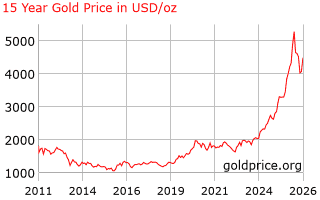
I don’t presume to know what the entire investment community is thinking. They may not expect inflation; they may be ignorant of the whole international dimension I mentioned earlier; they may expect inflation but choose to capitalize (for lack of a better term) on the bond bubble that the FED has inflated (chasing capital gains). Who knows? What I do know is that individuals invest in commodities, specifically gold and silver, when they expect inflation, and that the price of both gold and silver (along with other commodities) have risen dramatically.
Inflation is a micro economic phenomenon (this is an Austrian insight not found in neoclassical textbooks).
all of the criticisms you made of the cpi has been made by many mainstream economists (i’m not sure if i would call this a “neoclassical” issue, how exactly are you defining that term?). and if by “inflation is a micro phenomenon” you only mean that prices are determined by individuals decisions, then i don’t see what is so uniquely austrian about that slogan.
Costs do not affect prices. I would have agreed with you If you said: “how would you know that prices weren’t rising for those one or two goods because of industry specific alterations in demand/supply conditions”
since when did austrians believe that rising costs don’t impact “supply conditions”? if i asked you about the potential impact of taxing producers for each unit of X they produce, wouldn’t you agree that one of those outcomes would be an increase in prices to consumers (you might even go so far to agree that the outcome itself will depend on relative elasticities of supply and demand)?
if so, i (and most of the other economics professions would personally call that tax a increased cost to businesses. i had no idea austrians would have a problem with that terminology.
It doesn’t need to continue its current monetary policy in order to yield, somewhere down the line, severe general price inflation. We will see general price inflation as long as the FED does not drain the system of excess reserves and/or it stops paying interest on reserves.
you keep asserting that we will see severe general price inflation, but you don’t provide any evidence to back that assertion aside from noting that the monetary base has increased though at the same noting that interest is being paid on excess reserves which i would say is “contractionary” monetary policy, even under your definition. so how can we say that fed policy is truly expansionary (even by your definition) just from eyeballing the monetary base? like i said, i personally can’t.
at though at the end of your post you did mention…
Who knows? What I do know is that individuals invest in commodities, specifically gold and silver, when they expect inflation, and that the price of both gold and silver (along with other commodities) have risen dramatically.
but don’t you remember what you said earlier in that same post? you said you would agree that looking at the prices of a handful of prices can be dangerous as indicators of current or expected inflation because they can be impacted unrelated “supply and demand conditions”?
as i have already pointed out (as i was the first to suggest this metric in the thread), the price of gold has been rising for almost a decade. even though inflation has not greatly increased over the period. either gold traders started hedging against the comming inflaiton of 2015 in 2003 or there are other “supply and demand conditions” that you are not considering.
Falling costs does not, in itself, lead to lower prices. If there are certain barriers-to-entry, then falling costs will yield supernormal profit rather than lower prices. Prices will fall, all other things equal, if the reduction in costs leads to an outward shift in supply (but again, the lowered prices are the result of an increase in supply and not the result of falling costs). Consumers do not care about the cost-of-production; value is entirely subjective.This has been the Austrian position since 1871.
Do you understand how fractional-reserve banking and the money multiplier works? The central bank is preventing lending because it realizes that a 2 trillion dollar expansion in the monetary base may yield a 20, 30 or 40 trillion dollar expansion in the supply of money (the extent to which depends on the demand for money). See Mishkin, Frederick S. Money, Banking & Financial Markets (Part 4, chapters 14, 15, 16).
I raise this issue, not because I’m attempting to prove that we have general price inflation right now, but rather because it implies that investors do, in fact, expect inflation somewhere down the line, which is why they are investing in historical hedges against it. This, in turn, implies that the demand for bonds, and therefore the low interest rates we see, is the result of FED open market purchases, and not because of deflationary fears/expectations.
True, but the rate at which the price of gold is rising has increased dramatically over the past 3 years. Either way, we have had inflationary monetary policies, i.e., arbitrarily lowered interest rates, for quite some time. Some neoclassical economists are starting to catch on (Taylor) to this fact.
Falling costs does not, in itself, lead to lower prices. If there are certain barriers-to-entry, then falling costs will yield supernormal profit rather than lower prices. Prices will fall, all other things equal, if the reduction in costs leads to an outward shift in supply (but again, the lowered prices are the result of an increase in supply and not the result of falling costs). Consumers do not care about the cost-of-production; value is entirely subjective.This has been the Austrian position since 1871.
ill let you review my original claim, review your contest, then review this explaination.
Do you understand how fractional-reserve banking and the money multiplier works? The central bank is preventing lending because it realizes that a 2 trillion dollar expansion in the monetary base may yield a 20, 30 or 40 trillion dollar expansion in the supply of money (the extent to which depends on the demand for money). See Mishkin, Frederick S. Money, Banking & Financial Markets (Part 4, chapters 14, 15, 16).
so we agree this a contractionary move. glad we agree.
True, but the rate at which the price of gold is rising has increased dramatically over the past 3 years.
can you quantify how much faster it is increasing? can you explain how you controlled for other factors that might be contributing to the increase?
Either way, we have had inflationary monetary policies, i.e., arbitrarily lowered interest rates, for quite some time.
wait, i thought we just agreed that the fed was charging interest rates on to prevent an explosion in the money supply. for me, this makes it less clear how inflationary monetary policy has been. how are you solving this problem?
First, to be clear, I was the one who introduced the fact that the FED is paying interest on reserves. Next, there is no problem if you understand that the FED cannot indefinitely suppress the inevitable explosion in the supply of money (in the broader sense), or, in other words, that its attempt to completely control the entire monetary system is futile. I reject the possibility of effective central planning (and I assume that you do to). Until now, the FED has only been a player in the monetary system, albeit a major player.
Student, you seem to find your position as the debate progresses.
#1 interesting starting point on that calculation. 1999? that looks like 3-4 years before prices started rising significantly. of course, as i noted earlier when i posted the same graph, its hard to quantify anything using a picture. and of course you didn’t even try to account for other influences.
#2 nothing else you said directly addressed anything i said. so i guess i’ll let it slide.