Hello, and thank you for taking the time to check out my post. I am brand new to the forums though I have been a visitor to the website many times in the past 6 months or so. I am a mathematics graduate student with a casual interest in economics, so my economic theory isn’t quite airtight. I do consider myself an anarcho-capitalist and relate with the discourse on Mises.org. But let’s get to my question:
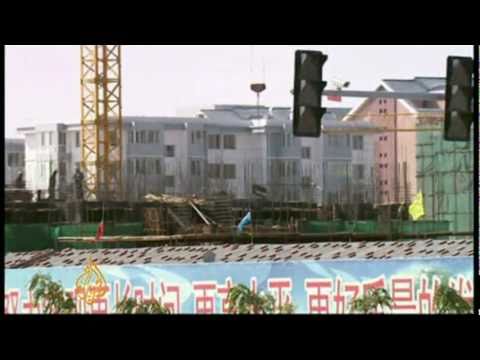
Today I was talking to a fellow student and he mentioned something that piqued my interest. He explained to me that for the past few years, the Chinese government has been spending billions of dollars to construct new cities that have yet to be inhabited. Check out this link for a quick description:
http://articles.economictimes.indiatimes.com/2011-06-20/news/29679756_1_cities-skyscrapers-towns
After learning about these “Ghost Towns” we began to discuss the economic implications of such policy. To me the program seemed like terrible policy. I explained that it is a massive misallocation of resources, as one can see by the fact that no one is utilizing the real estate. I mean, these state-of-the-art cities are just sitting there waiting for residents. I also tried to explain to him that by building so many new homes, the government devalued existing homes. Not too mention, the government had to steal the money via taxes to pay for those new cities. Or if they didn’t, then they had to print money thus devaluing the currency which is really a tax in itself.
To me it made good sense that this policy was absurd and wasteful, but my colleague didn’t agree. He saw new homes, fresh cities, efficient public transportation, and employment. From his perspective the Chinese people are a wealthier people than they were before the cities were built.
What is your analysis on the issue? I realize this may be a fairly basic topic for some, but I think I could extract some interesting perspective from the posters on this forum.