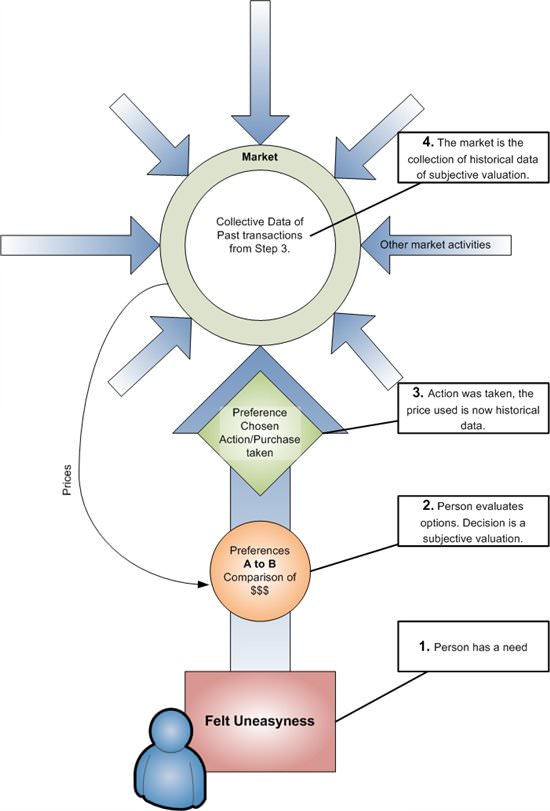
No. I’m not trying to be a wise guy. I’ve been kind of unnerved that silver has been steadily increasing. A price change implies that the market was wrong about the previous price. So the market’s been systematically wrong for like the last 2 years.
How does such error persist?
Obviously there are asymmetries in the market leading to this outcome, but people who undervalue silver sell it, and are no longer in the market. But I don’t believe this can really persist for TWO years because anyone who valued silver (correctly) at $35/oz would have just bought all the silver they could below that price.
I’m just confused. EMH isn’t working. I don’t buy Keyne’s line that “Markets can remain irrational far longer than you or I can remain solvent”. Hurr durr financial groups with very deep pockets exist partially for this reason.
Thoughts? Why can’t we iron out the price of silver? ><
Have they? I’m thinking its unlikely that they would consistently change in an unpredictable way. Like if silver mines were collapsing in argentina, that might alter the price if no one predicted it, but if silver mines keep collapsing every month you’d think it would have been predicted and bid up to the expected price.
I don’t know the exact causes of changes in commodity prices, although I think it’s worth considering that different commodity prices have been changing for different reasons. It’s also worth considering that commodity prices as a stock, or as a future, tend to be volatile. Likewise, an important underlying fundamental, or aggregate nominal demand (thanks to an increasing money supply), has been dramatically changing over the past two years. For many commodities, the supply factor has also been changing, in large part due to capital market restrictions, subsidizations, and other forms of government interventions (this is true, for example, of food prices).
Market prices have been fluctuating because of dramatic changes in the underlying fundamentals, not because of some “natural”, or uninfluenced, entrepreneurial error.
I don’t understand the premise. The concept of a price not changing seems foreign to me. The whole concept of exchange fundamentally implies a state of change.
Isn’t the steady rise of silver just the result of two magic ingredients:
a steady driving factor (money printing)
most people failing to recognize that as the driving factor
? Aren’t people systematically wrong because they are guided by completely bogus economic theories? I hear Ben Bernanke has been consistently wrong in almost all of his predictions for several years.
I thought that was what investment is supposed to be about: finding the driving factors that create big trends before others catch on to them.
These would only cause a change in price if price if the market failed to predict them. As far as I know, there hasn’t been a sustained trickle of unpredicted changes to the market all affecting silver positively.
If there has, I’m really really interested in what about those changes makes then unpredictable. I mean markets are pretty reasonable even in the face of natural disasters/oil price… But maybe prices are inherently unstable because each individual forecast is actually a range of prices. For example, if a hurricane hits oil is $200, else $100. The expected price is $110 but it won’t ever be that, and you can’t trade it at both values simultaneously. Well actually you could stipulate it via options contracts. I wouldn’t be surprised if this is normally done.
Digression. This regime would not result in systematic underprediction of commodity prices.
Don’t know. That’s another conundrum What I’m worried about is why the marginal buyers/sellers systematically underpredict silver prices. You’d think they’d eventually figure out that the fed prints money and factor that into their decision.
Thanks! I’m real excited. Most of my time has actually been taken up by Debate.org. You’ll be pleased to know that Anarcho-Capitalists dominate the debates/forums.
Well the idea is that bogus economic theories won’t persist on markets because you’ll consistently get the wrong answer. But even if only a minority of entrepreneurs guessed (correctly) that silver was under-valued, they’d just buy up all the silver from the rest of the market (pending capital constraints), and then the price would be bid up accordingly and stay around there.
I’m not talking about value, objective or otherwise. I’m talking about price. Price is a complex relationship between supply/demand, both of which may change. But the idea is that the market rewards actors who correctly forecast this relationship, systematically weeding out people who misjudge market conditions. So why are market conditions systematically misjudged in one direction? Random error would show a normally distributed fluctuation, but silver has quintupled price since 2003.
Wrong. Sometimes value changes. In fact, a lot of time value changes.
This is another part of your problem. EMH is more of a way of looking at the world than anything else. It is basically a tautology for most of its proponants. Bob Murphy has covered this quite extensively actually…
Even so th at silver’s rise was great, why does that imply the historical price was ever wrong? I still think your misunderstanding the concept of a price. I think all the literature about entrepreneur’s finding market discrepencies has confused. Prices are niether wrong nor right. The price that was used to demand a certain amount of silver in 2003 was appropriate for the time.
Things have changed. The money supply has expended at a higher rate then it has ever in the US history. Silver’s industrial use’s have exponentially grown since 2000. New investment models like SLV and silver’s linking back as a type of currency. There are countless reasons, all of which I cannot name, that are the cause for Silver’s climb.
By what logic can we say that it was ever in error? How is something priced in error?
But explaining it in this way understates the complexity. Demand ofcoarse implies changes in valuation.
Perhaps, in your entrepreneurial spirit, you are noticing a change and/or trend in human behavior/preference? Perhaps your noticing an accounting change(Nominal increase of money). Perhaps your noticing a long-term business trend(These things can last decades). Perhaps your noticing a combination of all 3? These are all good questions but none of them imply that price was wrong or incorrect. These questions don’t imply that past actions taken were done so in error.
Identifying trends(Systematic and consistent changes as you state) is a very normal entrepreneurial activity.
[EDIT] It’s not prices thats trending. It’s the following that are pushing a move in the price.(AS stated above)
Economic Policy driving a trend
Consumer preference alteration driving a trend
Industrial and/or capital good trend
IE your not seeing a trend in prices, your seeing an underlying trend that is influencing the price(Or a collection of trends). Calling it a price-trend is just a superficially easy way of identifying it.
I don’t know what you mean by autowin but the market always provides a way to make profit. I bought silver in 2007, hundreds in silver securities. You can imagine how I’ve done.
Okay. But the question is why this all wasn’t just predicted and factored into the contemporary silver price. If legislation is expected to go into effect that will close half the silver mines, the price of silver will be bid up pre-emptively. Why is the market failing, over and over again, by a magnitude of 700% over 9 years, the change in price of silver?
Okay. But the question is why this all wasn’t just predicted and factored into the contemporary silver price. If legislation is expected to go into effect that will close half the silver mines, the price of silver will be bid up pre-emptively. Why is the market failing, over and over again, by a magnitude of 700% over 9 years, the change in price of silver?
Because there isn’t a single conscious for all of humanity, Some people believe silver will go down, some believe it will go up, some believe it will skyrocket.
Exactly. And the people who are wrong get systematically weeded out of the market. I can see why there would be random fluctuations in price, due to error/new idiots entering the market, but that can’t explain why the price change is systematically to increase.
I think I have asked several times. What does it mean “The market has failed”. Does your definition of market failure mean a price has changed? That implies that changes in indiviudal preferences are some how a failure in human behavior? A failure in human changes of subjective preferences?
Are we expected to know what individual preferences are going to be in the future?
Or is it a failure of markets that prices are bid up because a certain commodity now has more uses for employment than it did 10 years ago?
Are we expected to know what technological advancements will come about in the future? And how these advancements will drive and effect industry?
Or is it market failure that monetary policy has increased the supply of money, and now more units of exchange are chasing the same commodity?
Were we suppose to know in 2003 that the GOV would do QE1,2, and all other manner of bailouts since 2007? Was the money supply in 2003 the same as it is today? Did people in 2003 know how big the money supply would expand to in 2011?
[EDIT]
Lets say hypothetically speaking everyone in the US in 2003 knew that the price of silver would be 35+/oz in 2011. What does that do the price of silver in 2003? Do the market fundamentals of 2003 support a silver price of $35/oz? Given that the money supply is smaller, there was less industrial utility for silver, and consumers were less concerned with rampant inflation.
We might see a temporary jump in the price of silver if this hypothetical situation were true, but the price would be unsustainable when considering the market fundamentals of that time.
 What I’m worried about is why the marginal buyers/sellers systematically underpredict silver prices. You’d think they’d eventually figure out that the fed prints money and factor that into their decision.